

Ensuring food security: 'Pakistan can take advantage of Chinese experience'
Pakistan can take advantage of Chinese experience to ensure food security as China is feeding around 21 percent of world population by just bringing four percent of the total global area under crops. They are producing 400 kilograms of grains per capita as against the 170 kilograms per capita available in Pakistan.
These remarks were made by Pakistan Agricultural Scientists Association (Pasa) Chairman, Jamshed Iqbal Cheema, while speaking to the members of Agriculture Journalists Association, here on Monday. He pointed out that even in Bangladesh and India per capita availability of grains is higher than Pakistan as they produce around 295 and 200 kilograms, respectively.
He was of the view that instead of looking towards the USA, Pakistan should join hands with China for increasing its agriculture productive and efficiency as both countries have similar land holdings and farming practices, except in research. He indicated that China has developed an effective agriculture research system, which has helped it in increasing its farm output. In addition, if Pakistan co-operates with China it can take the benefit of the huge Chinese market, he maintained.
Pasa Chairman highlighted that China is willing to help Pakistan in developing its agriculture sector, which was the lifeline of domestic economy. He indicated even the Chinese government is willing to set up a state-of-the-art 'Technology Display Centre' in Pakistan, which would be a win-win situation for both countries. Pakistan would get modern technology and China would get new customers, he maintained.
Responding to a query, he underlined that China could even ready to offer grant for setting up display centre in Pakistan, but it is concerned that the money disbursed for the project should be utilised transparently and the project could remain sustainable.
Cheema shared that he recently attended a two-day conference in China on the invitation of Chinese government, which discussed 'potential of co-operation between China and South East Asian countries in Agriculture'. He disclosed that prior to this conference he also had the opportunity to visit United States on an official invitation to study their agriculture and farming practices. Drawing comparison in Pakistan and other South Asian countries' agriculture, he underscored that he believes that the problems related to farming are almost identical.
Highlighting the major issues, he pointed out that non-availability of hi-tech seeds (hybrids and genetically modified); poor quality and high priced irrigation water (high PH and inefficient pumping from grounds); non-existence of food storage and processing facilities; and less mechanising especially with small farmers are major impediments in development of agricultural sector in the country. In addition, energy shortage and its high price are two other hardships of Pakistani agriculture, he maintained.
He pointed out that in China, land holdings are small like Pakistan, so they have developed small machinery and even had such machines, which could be utilised by owner of one acre of land. He said that Chinese through their technology are taking more from land and their experience could be utilised to enhance per acre yield in Pakistan.
Speaking about possible options for co-operation, he said Chinese hybrid seed technology could be utilised for producing more grains in Pakistan. Under this head, he said there should be genetic material exchange, joint breeding in Pakistan as well as in China, commercial production of hybrid seeds in Pakistan, joint production in Pakistan to reduce seed cost and transfer of technologies in seed processing. He said that both countries could also jointly work in efficient pumping and application of irrigation water, production of energy efficient electric motors and their marketing in Pakistan and treatment of water to reduce salt (PH).
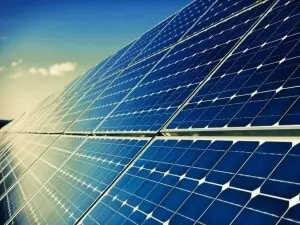
Cheema underscored that China could also help in solar energy technology. Pakistan is a country of 180 million population and sunshine is available for 10-14 hours a day for 330 days a year. Chinese help can be sought in installation of electric infrastructure for agricultural farms and production of solar plates in Pakistan and solar pump installation, he added.













Comments
Comments are closed for this article.