

As government deficit talks drag on and the United States moves closer to a potential debt default, there is one large group still without a plan for such an event - Wall Street. Partisan fighting in Washington has stymied efforts to raise the government's legal borrowing limit by an August 2 deadline after which the United States may not be able to make payments to creditors.
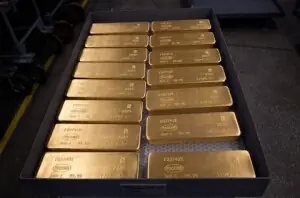
But money managers and Treasury traders don't believe politicians would dare to test the consequences of a default by a borrower considered virtually risk-free. So very few Treasury market participants are doing anything to prepare for it. Another reason why traders and money managers aren't taking action to hedge against a US default is that the options are few. And they all involve drastic moves that put trading books at risk. Their best guesses how to prepare include shorting the Treasury market, buying top-rated sovereign debt issued by countries like Germany and Canada, or buying gold. But no one is admitting to doing any of that yet.
"Most people put the probability of a default at close to zero. The ramifications are so serious that nobody thinks the government will be crazy enough to let it go," said William Larkin, fixed income portfolio manager at Cabot Money Management in Salem, Massachusetts.
There are two weeks left, and the acrimonious negotiations on a deficit reduction plan, which Republicans have said is a prerequisite to their support for a debt ceiling hike, have shown little progress. US President Barack Obama warned lawmakers on Friday they were "running out of time."
If the US were to default on its debt, interest rates could soar, the US dollar could lose much of its value, and the world might be shocked into another recession. Some say there are just too many ways the market could react if the US were to default. Others say they're too focused on daily news events, including developments in the European debt crisis, to think about a hypothetical default.
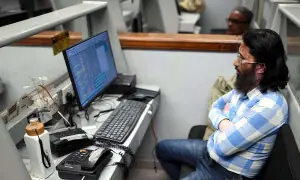
"There are different things that are occurring right and left every day," said Mack Budd, a Treasury trader at MF Global Securities in New York. "Maybe you could hedge if you knew for sure what the reaction in the market was going to be." Treasury traders' main trade association, the Securities Industry and Financial Markets Association, held a conference call on Friday with financial firms' IT technicians and systems managers to talk about how big trading systems would handle a missed US coupon payment.
"Your accounting systems are typically assuming that you're going to receive interest payments on a specified date and if that does not happen it's going to affect cash balances that are going to show up on your cash blotter every day," said Scot Johnson, senior client portfolio manager at Invesco Fixed Income in Houston, which has $200 billion under management.
"You're not going to have money to reinvest that you thought you would have," he said, offering an example of the operational issues traders and investors would face. "When you think about all the repurchase agreements that are traded every day and Treasuries are used to collateralise those transactions, you certainly run into a lot of those issues, priced into that transaction is the assumption that Treasuries are triple-A rated. How does a default change those assumptions?" Johnson added.



















Comments
Comments are closed for this article.