

Federal Reserve Chairman Ben Bernanke said on Wednesday the central bank is ready to ease monetary policy further if the economy weakens and inflation moves lower, hinting policymakers are actively mulling further stimulus. While holding to a view that recent economic softness would eventually pass, he appeared less confident in that projection - and more willing to entertain the possibility of another round of stimulus.
--- Says bond-buying programme has been effective
"The possibility remains that the recent economic weakness may prove more persistent than expected and that deflationary risks might reemerge, implying a need for additional policy support," Bernanke told the US House of Representatives Financial Services Committee. Bernanke specifically noted Fed forecasts for June, which were already revised down significantly from April, had not incorporated recent data, particularly last Friday's dismal employment report. It showed job growth essentially ground to a halt in May and June, while jobless rate rose to 9.2 percent.
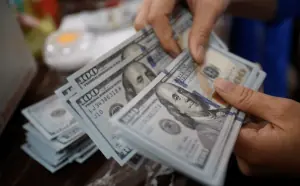
US stocks, which have taken a drubbing over the last week on worries about Europe's debt troubles and on concerns about the US economic outlook, rallied 1.2 percent, while Treasury bond prices and the dollar tumbled. Asked whether the Fed would be willing to launch another bond purchase programme if the economy slumps, Bernanke said: "We have to keep all the options on the table. We don't know where the economy is going to go."
Pressed on the budget, Bernanke reiterated his warning that a failure to raise the US debt ceiling would deal a severe blow to the global economic recovery. "Cutting programmes or raising taxes in ways that will reduce aggregate demand ... is going to slow the economy," he said.
Minutes from the Fed's June meeting, released on Tuesday, showed some policymakers believe the Fed should stand ready to provide more support to the economy if the recovery flags, rekindling the threat of a debilitating downward spiral in prices and wages. Others on the policy-setting Federal Open Market Committee, however, felt inflation risks might force the central bank to withdraw stimulus sooner than is currently anticipated. Still, given the change in tune, some investors were betting the more dovish members of the committee would win the day in pushing for a third round of quantitative easing if the economy continues to deteriorate.
"My initial reaction was 'QE3 here we come'," said Jack Ablin, chief investment officer at Harris Private Bank in Chicago. "We suspected the Fed would come up with some sort of QE3 in light of the disturbance surrounding the sovereign debt markets." Bernanke did not go into great detail regarding Europe, but the Fed chief's outlook on US growth prospects was understandably cautious.
After recovering from the steepest recession in generations beginning in the summer of 2009, the US economy has lost momentum in recent months. Gross domestic product expanded just 1.9 percent in the first three months of the year, and the second quarter does not look to have been much better. Bernanke held to the view that recent weakness was due in part to temporary factors like high energy costs and the effects on global industry from Japan's earthquake and tsunami.
But he acknowledged the labour market remains weaker than the Fed would like. "The most recent data attest to the continuing weakness of the labour market," Bernanke said. Bernanke defended the second round of bond buys against critics who said it had been ineffective.
He said the Fed estimates round two of quantitative easing, or QE2, lowered long-term interest rates by between 0.1 and 0.3 percentage point, which Bernanke said would be roughly equivalent to a 0.40 to 1.20 percentage point decline in the federal funds rate, which is currently set in a range between zero and 0.25 percent.
















Comments
Comments are closed for this article.