


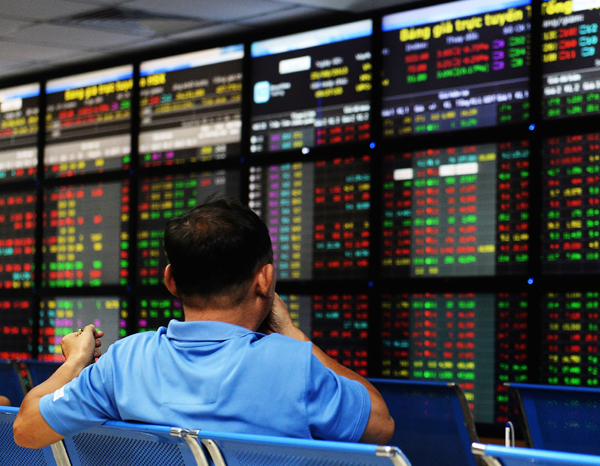
 HONG KONG: Hong Kong led a gain in most Asian markets Monday after officials announced the start of a long-awaited link-up with Shenzhen, but the dollar retreated against most of its peers after its recent surge.
Crude prices also saw fresh losses, after both main contracts slumped around four percent on Friday owing to disagreements over plans to cut output, with Iran and Iraq pressing to be excluded and Russia suggesting it will only freeze output.
Officials on Friday's said the tie-up between the Hong Kong and Shenzhen markets will start on December 5.
The scheme will give Hong Kong traders access to the mainland's second stock exchange, the world's eighth largest with a market capitalisation of $3.3 trillion as of September.
The tie-up follows a similar "stock connect" between Shanghai and Hong Kong launched two years ago, which gave foreigners new access to Chinese companies not quoted elsewhere, and enabled mainlanders to trade in Hong Kong.
The city's Hang Seng Index soared more than one percent in the afternoon, though Shenzhen slipped 0.1 percent by the close. Shanghai ended up 0.5 percent.
Most other regional stock markets were up, extending last week's gains on bets Donald Trump's spending plans will ramp up growth in the US economy.
Seoul rose 0.2 percent, Singapore added 0.8 percent and Wellington added 0.1 percent but Sydney dipped 0.8 percent.
Tokyo shed 0.1 percent after a seven-day winning run that took it to an 11-month high, with exporters hit by a slight recovery in the yen against the dollar.
The greenback has come off recent highs touched last week -- fuelled by bets on a US interest rate hike in December -- as traders take a breather.
The dollar tumbled to 112.00 yen, having almost hit 114 yen at the end of last week, while higher-yielding currencies also made inroads.
The Australian dollar, South Korean won, Indonesian rupiah and Mexican peso were also sharply up on the US unit.
"With the dollar rally pausing for a breath, we are seeing long dollar positions getting closed out," Khoon Goh, head of regional research at Australia & New Zealand Banking Group in Singapore, told Bloomberg News.
"With the yen falling the most among the G10 currencies since the US election, it is natural for a larger rebound in that currency."
News that Saudi Arabia, the kingpin of the OPEC cartel, had walked out of talks on Monday -- and suggested demand will pick up in 2017 -- has fanned fears a hoped-for settlement will not be reached before its twice-yearly meeting Wednesday.
"With so many toys being thrown out of their prams now in oil quota tantrums, its hard to see who will pick them all up by Wednesday's deadline," Jeffrey Halley, senior market analyst at OANDA, said in a note.
In afternoon trade Monday Brent and West Texas Intermediate were down but had pared early heavy losses.
The drop weighed on energy firms, with Australia's Woodside down 2.3 percent, Tokyo-listed Inpex losing almost one percent and CNOOC in Hong Kong off 0.2 percent.
- Key figures around 0700 GMT -
===============================
Tokyo - Nikkei 225: DOWN 0.1 percent at 18,356.89 (close)
Hong Kong - Hang Seng: UP 1.0 percent at 22,955.86
Shanghai - Composite: UP 0.5 percent at 3,277.00 (close)
Shenzhen - Composite: DOWN 0.1 percent at 2,126.82 (close)
Euro/dollar: UP at $1.0650 from $1.0603 Friday
Dollar/yen: DOWN at 112.00 yen from 113.08 yen
Pound/dollar: UP at $1.2500 from $1.2457
Oil - West Texas Intermediate: DOWN nine cents at $45.97 a barrel
Oil - Brent North Sea: DOWN nine cents at $47.15
New York - Dow: UP 0.4 percent at 19,152.14 (close)
London - FTSE 100: UP 0.2 percent at 6,840.75 (close)

















Comments
Comments are closed for this article.