


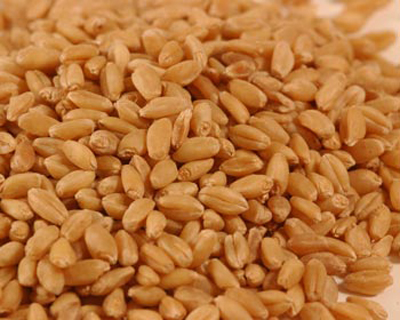
 SINGAPORE: US wheat and soy futures ticked higher on Wednesday despite escalating worries about the global economy and the IMF warning the United States could slip back into recession, while corn hardly moved as dealers awaited a possible purchase by China.
Dealers turned their attention to the conclusion of a two-day US Federal Reserve policy meeting, where Chairman Ben Bernanke is expected to announce further steps to stimulate a stagnating economic recovery.
Grains have been under pressure from fears that a global economic slowdown could slash demand, although wheat is still supported by a lack of rain in the drought-stricken US Plains, while recent declines in corn prices have spurred buying.
"Under normal circumstances we would expect prices to rise. But what we have right now in terms of the global economic environment is anything but a normal environment, and that's what's pressuring prices lower," said Luke Mathews, commodities strategist at Commonwealth Bank of Australia in Sydney.
"But what we know in the grains market is that supply is critically tight, particularly in the US corn market. It is possible that we are going to see further downgrades to production prospects out of North America."
December wheat added 0.2 percent to $6.76 after ending firmer on Tuesday in a technical rebound. November soybeans rose 3-1/2 cents to $13.41-1/2 per bushel on bargain hunting following a sharp drop this week.
December corn hardly moved at $6.89-3/4 a bushel, not far from a six-week low hit earlier this week, but the market was still hoping that talk about China's purchase would eventually come true.
The corn market was abuzz with rumours China was inquiring about buying up to 5 million tonnes of corn from the United States, while China's plan to sell about 3.7 million tonnes of corn from its reserves by November was seen as a sign that it could shop for US grains.
US corn struck all-time high of almost $8 a bushel in June.
"We think in terms of supply situation, the corn market remains the commodity with the tightest supply, therefore, we think it is the one that is likely to test record highs," said Mathews of Commonwealth Bank of Australia.
"We think the fundamentals for grains themselves are actually quite bullish, and this is if we step back and take a very simplifying assumption that we can ignore the financial issues that are occurring elsewhere."
Corn farmers in some parts of the US Plains are finding their newly harvested crop has to be heavily discounted or cannot be sold at all due to the presence of a vicious fungus that makes the corn dangerous to eat.
In other markets, the Nikkei was flat ahead of the outcome of the Fed's policy meeting, while the dollar fell close to a record low against the yen, pressured by Japanese exporters and stop-loss selling.
Europe and the United States could slip back into recession next year unless they quickly tackle economic problems that could infect the rest of the world, the International Monetary Fund said, adding that Europe's leaders were failing to act decisively enough.
Copyright Reuters, 2011
















Comments
Comments are closed for this article.