


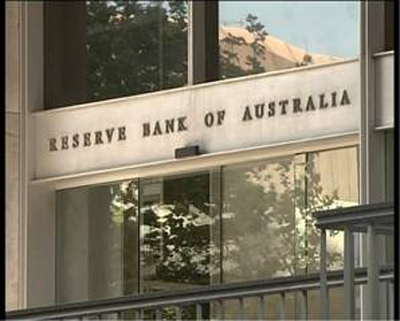
 SYDNEY: Australia's central bank held interest rates steady at 4.75 percent on Tuesday but warned it had considered tightening and was concerned about the outlook for inflation, leaving the door wide open to a hike in coming months.
In a brief statement after its monthly policy meeting, the Reserve Bank of Australia (RBA) cited uncertainty in global markets, a cautious consumer, weak credit growth and a high local dollar as some reasons for holding fire on rates.
"The board considered whether the recent information warranted further policy tightening," RBA Governor Glenn Stevens said.
"On balance, the board judged that it was prudent to maintain the current setting of monetary policy, particularly in view of the acute sense of uncertainty in global financial markets over recent weeks," he added
Rates have been on hold at 4.75 percent since the last hike in November 2010 and most analysts assumed they would stay there this month, largely due to the cloudy global outlook.
A Reuters poll of 20 economists had found 16 expected no change, with four tipping a rise to 5 percent .
Futures markets had also implied only a 14 percent probability of a hike today, and rallied in the wake of the decision as investors pared the risk of a move while the global outlook remained so clouded. The Australian dollar slipped almost half a cent after the decision.
Until recently investors had seen more risk of a cut than a rise, but a surprisingly high reading for core inflation in the second quarter put tightening back on the agenda.
Underlying inflation is running at an annualised pace of around 3.6 percent, well above the central bank's long term target of 2 to 3 percent. That brings back memories of 2007/2008 when price pressures accelerated far faster than policy makers expected and argues for a hike at some point.
"The Board remains concerned about the medium-term outlook for inflation," Stevens said, but added: "It is appropriate under such circumstances for monetary policy to exert a degree of restraint."
Australia's terms of trade are also at record highs, thanks in large part to Chinese demand for its commodities, and mining investment is enjoying a boom of truly epic proportions.
Figures from Deloitte last week showed investment across the economy under way or in the pipeline had reached A$832 billion, a staggering amount for an economy with an annual output of A$1.3 trillion.
On the other hand, consumers have been choosing to save rather than spend, the housing market has turned soggy and a high local dollar is hurting manufacturing and tourism.
Tuesday's data underlined the softness in housing with house prices in Australia's eight capital cities falling 1.9 percent in the year to June, a long way from the 19 percent growth seen early in 2010.
Approvals to build new homes also disappointed with a 3.5 percent drop in June, when analysts had looked for a rise of around 2.0 percent. That left approvals at the lowest since June 2009 and pointed to slowing construction ahead.
Unemployment remains low at 4.9 percent, though jobs growth has clearly slowed and the labour market does not seem to be tightening any further.
Globally, Asia remains resilient but crises in the United States and Europe have sapped confidence and recent downward revisions to US economic growth suggest the world economy has less momentum than previously thought.
Copyright Reuters, 2011


















Comments
Comments are closed for this article.