


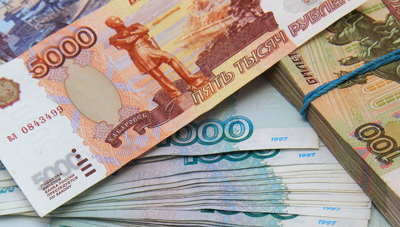
 LONDON: The rouble jumped 0.8 percent on Tuesday and Russian shares rose after the European Union held off imposing new sanctions though broader emerging equities slipped for the fourth day, their mood soured by weak Chinese housing data.
The rouble rose to a five-session high to the dollar as European Union governments sounded the alarm on an upsurge in violence in Ukraine but took no action to impose further sanctions on Moscow.
Other emerging currencies such as the rand and lira also firmed half a percent , as the dollar index dropped.
The rouble was also boosted by companies buying roubles for end-month tax payments while central bank governor Elvira Nabiullina threatened to wipe out rouble speculators by intervening unexpectedly in the market.
Russian dollar-denominated shares jumped 1.7 percent while rouble stocks rose 0.5 percent. Rouble volatility - a gauge of expected swings in a currency - has also been easing since hitting a record 36 percent a week ago.
UBS strategist Manik Narain said the EU sanctions issue was providing some modest relief but noted: "This is taking place within the context of significant rouble weakness over the past sessions so it is just a bit of profit taking."
"The risk of further sanctions has not been eliminated, it is just that there have not been any implemented today."
Nabiullina's comments defending the rouble float could ultimately weaken the rouble further, Societe Generale analyst Phoenix Kalen said, adding: "They imply they are comfortable with current levels of rouble weakness."
Meanwhile Ukraine's hryvnia rose marginally at a central bank auction, after tumbling 14 percent since Nov 5 when an unofficial dollar peg was ditched.
There was no respite however for Nigeria's naira which tumbled another 1.5 percent to the dollar though stocks were flat.
Meanwhile, in Israel the shekhel slid further to new two-year lows after a deadly attack in a Jerusalem synagogue.
MSCI's emerging equity index nudged lower while Asian ex-Japan shares eased 0.3 percent after China home prices clocked their biggest fall since 2011, pointing to a sustained property market downturn.
Asian currencies however were broadly stronger against the dollar and Narain of UBS said lower oil prices would benefit most emerging energy importers. He added: "It will likely put a lid on how fast rates in the U.S. are likely to rise."

























Comments
Comments are closed for this article.