


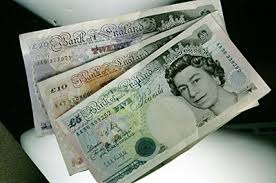
 LONDON: Sterling fell against the dollar on Wednesday, after two days of gains, on signs of easing British inflation which could allow the central bank to keep interest rates low.
The Bank of England's Monetary Policy Committee starts a two-day meeting on Wednesday and is expected to keep rates at record lows.
The BoE has opted to keep policy ultra-loose, despite a sustained economic recovery, as wages are still subdued.
On Wednesday, there was more evidence of declining price pressures.
Prices in British shops fell last month at a faster pace, driven down by a steep decline in prices for non-food products, the British Retail Consortium said. Retail prices in September were 1.8 percent lower than a year earlier, the BRC said. The data came just hours before a survey from mortgage lender Halifax showed UK house price growth is likely to moderate going into next year.
In the three months to September, house prices rose 9.6 percent on an annual basis, the pace easing slightly from 9.7 percent growth during the three months to August.
All of which left the pound vulnerable, especially after the International Monetary Fund lowered forecasts for global growth on Tuesday. That spurred a correction in stock markets and drove inflows to the safe-haven dollar and yen.
The pound was down 0.25 percent against the dollar at $1.6055, potentially heading for its first loss in three days.
"The lack of inflation pressures could see UK rate expectations slip back, leaving the pound vulnerable especially against the dollar," said a London-based spot trader. Sterling was flat against the single currency.
The euro was steady at 78.775 pence, holding its ground despite diverging growth prospects and contrasting outlooks for monetary policy between the euro zone and Britain.
While investors are pricing in a chance of a rate hike by the BoE in the spring of 2015, expectations are growing that flagging growth in the euro zone and the threat of deflation will drive the European Central Bank to opt for quantitative easing.
The IMF said on Tuesday that Britain would be the fastest-growing major economy in 2014.
Its forecast of 3.2 percent growth for Britain contrasted with cuts in its forecasts for the euro zone's three biggest economies - Germany, France and Italy.
The Italian economy would shrink by 0.2 percent this year, it said.
The IMF also said it sees a 30 percent chance of the euro zone slipping into deflation over the next year, and nearly a 40 percent probability the currency bloc could enter recession. The UK would leave its crisis behind, it said.
The pound had surged more than 15 percent against the dollar in the year to mid-July on expectations the BoE would raise interest rates before its peers in the United States and Europe.
But it has fallen almost 7 percent in the three months since then as the expectation of a rate hike by the end of 2014 faded, triggering some speculation that the United States could now raise rates before the UK. Uncertainty in the lead up to the Scottish independence referendum that was held in mid-September also drove speculators to place bets against the pound. Some analysts say the drop in the pound could have run its course and were recommending investors to buy it on dips.
"Sterling/dollar sell-off is overdone," said Petr Krpata, currency analyst at ING.
"The risk of a decline in US inflation leading to a reversal of market expectations of the future US rate profile and our view that the BoE is still on track to start the tightening cycle in February 2015 all point to a rebound to $1.66 levels."

























Comments
Comments are closed for this article.