

Nigerian unions threaten strike

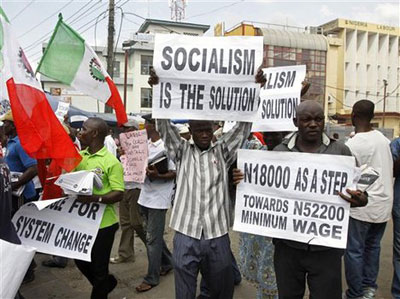 ABUJA: Nigeria's main labour unions have threatened a nationwide strike in two weeks' time unless the government implements a new minimum wage across Africa's most populous nation.
President Goodluck Jonathan signed a bill passed by parliament earlier this year more than doubling the monthly minimum wage to 18,000 naira ($120) from 7,500 naira but the unions say the agreement has not been fully implemented.
"Organised labour under the auspices of the Nigeria Labour Congress (NLC) and Trade Union Congress (TUC) hereby issues a two-week ultimatum for full implementation of the minimum wage across the country," NLC President Abdulwaheed Omar said.
"All unions in both public and private sectors are to begin immediate sensitisation and mobilisation of Nigerians for a nationwide strike action at the expiration of this ultimatum," he told reporters late on Thursday.
The NLC and TUC represent members across most sectors of sub-Saharan Africa's second-biggest economy, including parts of the oil industry, and prolonged industrial action has the potential to bring the country to a halt.
But widespread strike action has been rare in the past few years in Nigeria and previous walkouts tended to last only a day or two, in a country, where much of the population is employed in the informal economy and get by on $2 a day or less.
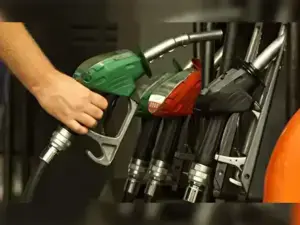
The NLC also warned it would resist any attempt to increase fuel prices, which are subsidised by the government and have remained at 65 naira per litre for several years, despite broad fluctuations in global crude prices.
Nigeria is Africa's biggest oil and gas producer but the shambolic state of its refineries means it is forced to import most of its petroleum products.
The central bank and the government have repeatedly said that the fuel subsidies which cost Nigeria billions of dollars each year -- are unsustainable and many analysts expect Jonathan's new administration to try to remove them.
But the biggest challenge will be the unpopularity of such a move among ordinary Nigerians who see subsidised pump prices as the only tangible benefit of living in an oil-producing nation.
"Any attempt to increase the prices of petrol in the guise of deregulation will be resisted," Omar said.
"Organised labour is willing, ready and capable of leading the Nigerian people on mass resistance against such unprovoked, unpatriotic move," he said.
The unions launched a warning strike last November to push demands that Jonathan send the bill raising the minimum wage to parliament. The strike, which shut banks, schools and parts of the transport system, was suspended on the first day.
Jonathan was sworn in for his first full term just over a month ago after winning April elections. Further industrial action would be an embarrassment so early in his tenure.
Copyright Reuters, 2011







Comments
Comments are closed for this article.