


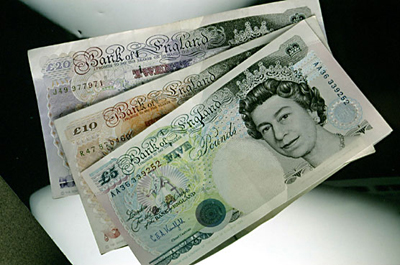
 LONDON: Sterling hit a two-month low against the dollar on Tuesday as investors awaited Wednesday's important Bank of England Inflation Report and UK labour market data for signs of when interest rates might rise.
The report should provide a steer on the bank's intentions for rate hikes, which it has said would be modest and gradual when they come. But data showing wage growth - a driver of inflation and a marker of how much slack remains in the labour market - could prove equally important.
Sterling fell 0.1 percent to $1.6770 on Tuesday, having hit $1.6757 earlier in the day. The last time it was that low was before BoE Governor Mark Carney's pivotal Mansion House speech on June 12, when he said interest rates could be increased sooner than markets expected.
"Given what the Bank said in June, and what it has said in its minutes, I think it has to follow through to some extent in the Inflation Report," said Simon Smith, head of research at online trading platform FxPro. "The risks are skewed to the upside in terms of a sterling reaction."
The Mansion House comments caused sterling to surge almost 1 percent in a day against the dollar, providing more fuel for the pound's rally of almost 15 percent in a year.
But that rally came to an abrupt end in the middle of July, with sterling falling around 2 percent against the greenback over the past month.
That drop has come chiefly on the back of a resurgence in the U.S. currency, but there are also doubts creeping back into the market over the strength of Britain's recovery and, consequently, the imminence of rate rises.
"Investors are currently swallowing a dose of reality with respect to the performance of the UK economy and the outlook for BoE interest rate policy," Jane Foley, a senior currency strategist at Rabobank, said in a morning note.
"The market may have got a little ahead of itself in pricing in BoE rate hikes, though tomorrow's release ... will be keenly watched for direction."
The euro edged down 0.1 percent against the pound to 79.66 pence, driven mainly by a fall against the dollar.
The single currency was hovering near 9-month lows against the greenback, with investors positioning for a weak German sentiment survey that is likely to add to signs of a slowdown in the euro zone recovery, specifically in Germany.


























Comments
Comments are closed for this article.