

Latin America's leftist firebrand

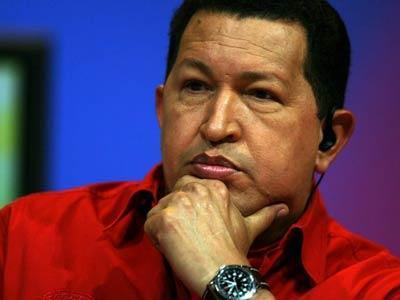 CARACAS: Hugo Chavez has traveled a bumpy road since being elected Venezuelan president in 1998, inspiring love and loathing at home and abroad -- and the fury of critics for dividing the population.
A ubiquitous and vocal presence on the global stage for more than a decade, Chavez admitted Thursday to having had a cancerous tumor removed, ending weeks of speculation over his condition and unprecedented absence from public life since arriving in Cuba June 8.
The leftist leader is popular with the long-neglected poor for his oil-funded health and education programs, but blamed by a vocal opposition for rising crime, corruption and inflation.
A prodigious tweeter, Chavez, 56, is also prone to lengthy broadcasts on national TV, including a weekly presidential address during which he often breaks into song and drives home his self-styled 21st century socialism.
Inspired by Cuba's Fidel Castro, he is a self-sufficient revolutionary, controlling the Western Hemisphere's largest oil reserves and one of the most important foreign sources of crude for the United States.
But the firebrand has embraced many US enemies over the years, including at one time the late Iraqi leader Saddam Hussein and Iran. He famously called former President George W. Bush "the devil."
At first he was warmer towards President Barack Obama, but Chavez soon returned to type and started portraying the United States again as an evil imperialist power.
While denying US charges that he supported Colombia's FARC rebels, Chavez introduced a string of social programs at home as part of his "Bolivarian" revolution -- named after the South American liberator, Simon Bolivar.
Nationalizations have been popular among his supporters, while business leaders fear they are driving away foreign investment and threatening Venezuelan private companies.
Critics also charge that Chavez has too much power, with large sway over the courts, lawmakers and the election council.
Despite his social programs, the former paratrooper -- who led a failed military coup in 1992 -- has failed to bridge the yawning gap between rich and poor.
Born into a working class family, Chavez became a career military officer before forming a secretive revolutionary movement in the 1980s and working to overthrow the system.
He was imprisoned for the failed coup attempt for two years but after emerging from jail and founding the Fifth Republic Movement he was elected president of Venezuela on December 6, 1998.
In recent years, Chavez has reduced weapons sourcing and military ties with the United States and increased arms purchases from alternative sources such as Russia, Belarus and China.
As the most powerful of a circle of Latin American leftists that includes the leaders of Nicaragua, Ecuador and Bolivia, Chavez has long slammed the workings of neoliberal globalization.
He promotes his own vision of trade, the Bolivarian Alternative for the Americas, or ALBA, set up with Cuba in 2004, and was a driving force behind the Community of Latin American and Caribbean States (CELAC).
His health problems forced him to scrap next week's inaugural CELAC summit on Margarita island off the Venezuelan coast.
Chavez had heavily promoted CELAC, which aims to counter the once overwhelming US influence on Latin American politics, and which he hopes will further his ambitions as a regional power broker.
CELAC was set up in February as an alternative to the Organization of American States, a regional Americas bloc which, unlike CELAC, includes both the United States and Canada.
Born of schoolteacher parents in the southwestern town of Sabaneta on July 28, 1954, Chavez studied at the Military Academy of Venezuela in Caracas. Twice divorced, he has four children.
Copyright AFP (Agence France-Presse), 2011















Comments
Comments are closed for this article.