


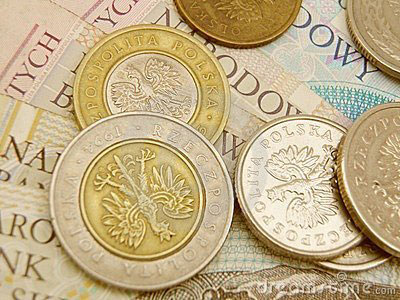
 PRAGUE: The Polish zloty held near a 14-month high against the euro on Monday as it is seen benefiting from a divergent interest rate path between Poland and the euro zone.
The European Central bank cut interest rates on Thursday and announced other measures to spur growth in the euro zone and fight deflation risks.
In contrast, analysts expect Poland's central bank (NBP) has already finished cutting rates and will be the first in central Europe to raise rates, although not until at least the end of the third quarter.
The zloty has gained 2 percent against the euro in recent weeks on that outlook, which has also spurred capital inflows into Poland, depressing Polish bond yields.
Polish yields were down a few basis points on Monday.
"Recently, large amounts of capital have flowed into the market due to ECB policy, so I think there is still room for further gains," said Henryk Sulek, a bond dealer at Raiffeisen Polbank.
Goldman Sachs said the Polish central bank's reluctance to cut rates should bode well for the zloty.
"The zloty could gain against both the euro and the EM currencies where the central banks are more dovish and fundamentals point to more weakness ahead, especially the (Hungarian) forint and the Turkish lira," it said.
"But there remains risk that the NBP may intervene in the FX market if it considers the speed of appreciation excessive."
Polish officials have already expressed concerns about excessive appreciation of the zloty. Central bank Governor Marek Belka was quoted as saying by Bloomberg news agency on Sunday that the ECB's fresh round of monetary easing had the potential to strengthen the zloty.
At 1149 GMT, the zloty was bid 0.1 percent lower at 4.098 to the euro, just off an early morning high of 4.0915.
Other currencies were also off highs, with Hungary's forint down 0.3 percent against the euro and Romania's leu steady, while local markets were closed for a public holiday.
In Slovenia, investors picked up government bonds and the 10-year benchmark bond yield dipped to 3.124 percent, the lowest since the country joined the euro zone in 2007.
The country's blue-chip stock index gained 1.2 pct thanks to a 3.3 percent rise in Telekom Slovenia. The state investment fund said on Monday it would invite binding bids this week for the privatisation of the telecom operator, slated for this year.
The Czech crown was little changed after data showed a pick-up in the annual inflation rate to 0.4 percent, from 0.1 percent.
Markets will be watching inflation data from around the region this week.
While economic activity is rising in central Europe, inflation pressures have been subdued. However, analysts expect central banks to maintain current loose monetary policies rather than cut interest rates further, although there is still some scope in Hungary for further easing.
The rise in inflation in the Czech Republic is good news for the central bank, which has been concerned about deflation. In November it launched market interventions to weaken the crown to fight the risk of deflation, having already cut interest rates to near zero.
Neighbouring countries like Slovakia and Hungary have already seen deflation, while Poland is likely to see prices fall in the next couple of months, Finance Minister Mateusz Szczurek told Reuters last week.


























Comments
Comments are closed for this article.