


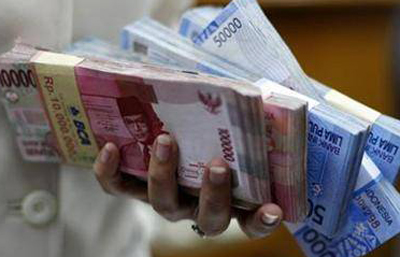
 SEOUL: Most emerging Asian currencies rose on Monday, shrugging off broader weakness in riskier assets globally after Crimea voted overwhelmingly to break from Ukraine to join Russia.
The Indonesian rupiah hit a 4-1/2-month high, with local stocks hitting a nine-month peak on hopes that the upcoming elections may produce a smooth transition of power to the main opposition party.
South Korea's won firmed on exporters' demand for settlements.
The gains came even as the Chinese yuan lost ground after the central bank at the weekend widened the currency's daily trading band to 2 percent, a development that had been widely expected.
"Asian currencies have priced China's move in since late February when the yuan plunged, which was seen as a pre-emptive action before the widening," said Jeong My-young, Samsung Futures' research head in Seoul.
"They are unlikely to extend gains due to Ukraine, a slowing China economy and the Fed's tapering," Jeong said, referring to the Federal Reserve's gradual reductions in stimulus spending.
A complete, preliminary ballot count showed that nearly 97 percent of votes in Ukraine's Crimea have voted to join Russia, the chairman of the regional government commission overseeing the referendum said earlier.
RUPIAH
The rupiah rose as much as 0.8 percent to 11,245 per dollar, its strongest since Oct. 31, on demand from leveraged funds and interbank speculators.
The official Jakarta Interbank Spot Dollar Rate (JISDOR), which Indonesia's central bank launched last year in an effort to manage exchange rate fluctuations, was fixed at 11,272 rupiah per dollar, a stronger than Friday's 11,421.
Jakarta shares extended gains after the country's main opposition PDI-P party named Jakarta governor Joko Widodo as its presidential candidate. He is widely seen as a shoo-in to be next leader of the world's third-largest democracy.
Still, the rupiah is seen facing a chart resistance at a 200-day moving average of 11,265, analysts said.
The Indonesian currency had been closing daily sessions weaker than the average since September 2011.
WON
The won rose as exporters bought it for settlements and some interbank speculators cut dollar holdings.
The South Korean currency found further support from a lack of dollar demand from offshore funds and local importers, traders said.
"The yuan's band widening has been factored in and many players saw the 1,070 level as cheap (to buy the won)," said a foreign bank trader in Seoul.


























Comments
Comments are closed for this article.