


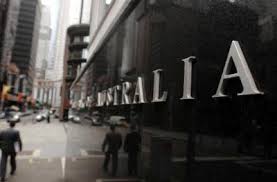
 SYDNEY: The Australian dollar dropped below 90 US cents Friday after central bank governor Glenn Stevens said he wanted to see it at 85 US cents to help stimulate trade-exposed sectors of the economy.
In a wide-ranging interview with the Australian Financial Review, Stevens also said he expected the US Federal Reserve to scale back its stimulus programme "before too much longer".
Speaking just weeks after saying currency intervention was part of his "toolbox", Stevens said he would prefer a lower dollar over lower interest rates as a mechanism to spur the economy.
"To the extent that we get some more easing in financial conditions, at this point it's probably more preferable for that to be via a lower currency at the margin than lower interest rates," he told the newspaper.
Interest rates are at record lows of 2.50 percent after a series of cuts designed to stimulate the economy as its decade-long Asia mining boom cools.
With falling terms of trade, the bank chief said he expected the Australian dollar's natural level to be lower.
"I thought 85 US cents would be closer to the mark than 95 US cents ... but really, I don't think we can be that precise," he said.
"I just think that if things over the medium term evolve as we're presently assuming -- and I think it's reasonable to make these assumptions -- it's going to be surprising if a nine at the front is the right number."
His comments sent the currency to a three-and-half month low. It was trading at 89.26 US cents on Friday morning, down from 90.31 cents on Thursday.
The dollar's earlier strength, despite a fall in commodity prices, has squeezed the Australian economy, eroding government revenues and pressuring industries such as manufacturing and tourism, prompting car-maker Holden to this week announce it will stop making vehicles in Australia.
On US monetary policy, which has driven down the value of the American dollar, Stevens said: "I think we could all hope that the Fed will be in a position to do the tapering at some point before too much longer."
With signs of improved economic activity, investors are tipping the US Federal Reserve to announce a small cut in its stimulus programme at next week's policy-setting meeting.
"When they get to the point where they can do that or begin that, that's actually a good news story," Stevens said.
"It will be disruptive around financial markets around the world, and it may put pressure on various countries, as we've seen -- we have had a preview of that earlier in the year --, but I think when the US can start what I think will be a long journey back towards something more normal I think that's actually a good thing."


























Comments
Comments are closed for this article.