


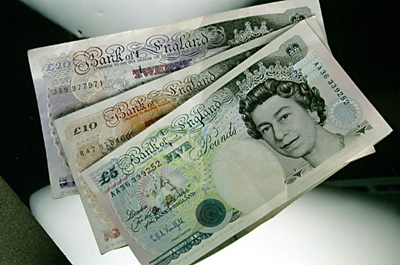
 LONDON: Sterling took a breather after hitting a five-year high against a basket of currencies earlier this week, but losses should be limited by expectations monetary policy will tighten sooner than had been predicted.
Sterling is also likely to draw support from an encouraging message about Britain's finances and economy in an update by finance minister George Osborne expected later on Thursday. Any cut in government borrowing could see the pound push towards recent two-year highs against the dollar, traders said.
"We are expecting Osborne to upgrade growth forecasts, and that should help sterling," said Alex Edwards, head of corporate sales at UKForex. "We are bullish about sterling and it should rise towards $1.64 and perhaps even $1.65."
Sterling was down 0.15 percent at $1.6355, with stop-loss sell orders cited at $1.6320 and $1.6300. It hit a two-year high of $1.6443 earlier this week, up more than 10 percent against the dollar from the three-year low of $1.4814 it reached on July 9.
The trade-weighted sterling index, which hit a five-year high of 85.1 on Tuesday, was trading at 84.7.
The euro was up 0.2 percent against the pound at 83.15 pence , staying away from a 11-month low of 82.53 pence struck on Monday.
The euro is likely to take its cue from European Central Bank chief Mario Draghi's comments later in the day, traders said. The ECB is widely expected to leave rates unchanged, but inflation forecasts may undershoot the bank's target of just under 2 percent. That is likely to keep pressure on the ECB to lower rates or inject a fresh liquidity.
All of which could see euro underperform the pound in coming weeks, with a number of analysts sticking to short euro and long sterling recommendations as ECB and Bank of England policies diverge.
The BoE is expected to deliver an unchanged verdict later on Thursday, but surveys of services, construction and manufacturing this week showed the British economy is strengthening, and investors are pricing in an early tightening.
In forward guidance provided in August, the BoE said it would keep interest rates low until unemployment fell to 7 percent - something it expected to happen in late 2016. It has since said the jobless rate could fall below 7 percent sooner, but that it still intends to keep policy ultra-loose.
Nevertheless, overnight sterling interbank average rates - the very short-term interest rates that form the basis of lending costs in the wider economy - were pricing in a slight chance of a move in 18 months' time and a greater risk of tightening in two years' time.
"We remain short euro/sterling heading into the (ECB) meeting. A signalling that risks are now to the downside would be needed for additional easing expectations and euro weakness to gain traction," BNP Paribas said in a note.




















Comments
Comments are closed for this article.