


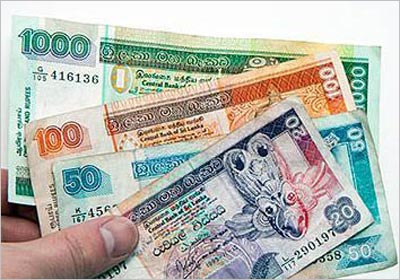
 COLOMBO: The Sri Lankan rupee traded firmer on Friday as dollar sales by banks and exporters helped to ease pressure on the currency after the Federal Reserve's surprise decision to stick to its stimulus programme.
The rupee spot traded at 132.10/20 by 0809 GMT, compared with Wednesday's close of 132.20.
Sri Lankan markets were closed on Thursday.
Dealers said the three-day forward, or spot-next, was also active on Friday in the absence of inactive spot trade, and traded at 132.15/25 per dollar, firmer from Wednesday's close of 132.35/45.
"Rupee is firmer on banks and exporter dollar sales. The pressure has eased in the short term on global developments," a currency dealer said.
The dollar edged off a seven-month low against a basket of currencies on Friday.
Many dealers expect the rupee to be steady around the 132.25 level due to the NSB's $750 million 5-year bond inflow.
However, some dealers said the rupee has the tendency to depreciate in the long term in the absence of firm dollar inflows from exports and remittances.
The currency hit a record low of 135.20 on Aug. 28, but has recovered since then. It has fallen 3.6 percent this year, after depreciating about 10 percent in 2012.
The rupee has been falling since early July when foreign investors started pulling out of local bonds as US Treasury yields rose in expectation of a Fed pullback.
Foreign holdings in Sri Lankan government securities hit a more than five-month low last week after falling for three straight weeks. They edged down 0.6 percent to 479.59 billion rupees ($3.63 billion) in the week ended on Sept. 11, the lowest since April 3, central bank data showed.
Foreign holdings have fallen 4.74 percent in the three weeks ended Sept. 11, the data showed.
Central bank Governor Ajith Nivard Cabraal said earlier this month that foreign holdings in government securities are still above the threshold of 12.5 percent of the total outstanding T-bills and T-bonds.
Sri Lanka's main stock index was up 1.87 percent at 0856 GMT. It had hit a more than eight-month low on Sept. 9.


























Comments
Comments are closed for this article.