


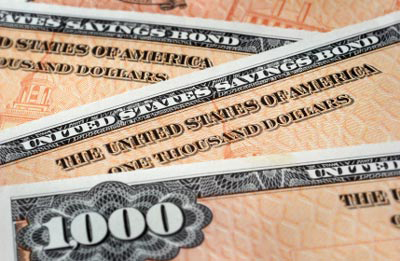
 NEW YORK: US Treasury debt prices rose on Monday after the withdrawal by Lawrence Summers for consideration as chairman of the Federal Reserve eased fears of more aggressive monetary policy tightening if he were to head the US central bank.
Bond yields fell to their lowest this month, led by that on the five-year note, which fell as low as 1.55 percent. The interest rate on one-month bills dipped below zero.
The rally faded, however, as investors looked ahead to the Federal Reserve's announcement on Wednesday after a two-day policy meeting, when the Fed is seen as likely to announce it will reduce the size of its bond-purchase program.
The surprise withdrawal on Sunday by Summers, a former Treasury secretary and former top economic aide to President Barack Obama, came two days before Fed policymakers meet and coincided with the fifth anniversary of the collapse of Lehman Brothers. It was widely perceived as positive for bonds as well as stocks.
Traders now expect the Fed's vice chair, Janet Yellen, will be the front-runner to succeed Ben Bernanke, whose term expires in January. It is expected that Yellen would continue the Fed's likely slow, cautious approach to reduce its bond-buying program, which is designed to stimulate the economy.
"Assuming Janet Yellen moves to the fore, it should reduce uncertainty across markets, increasing the likelihood of continuity at the Fed and an ultra-smooth transition," said Robert Tipp, chief investment strategist with Prudential Fixed Income in New Jersey.
A Yellen-led Fed would also likely mean it will take its time to raise short-term rates even after it stops buying bonds.
Summers' withdrawal lifted Yellen's perceived chances to become the Fed's first female leader, but the White House has not made a decision on its nominee. Other candidates said to be still in contention for the job include Donald Kohn and Roger Ferguson, both of whom are former vice chairs of the Fed.
The shift in thinking led to a sharp drop in yields in short-dated Treasuries, which this month hit their highest since May 2011, partly on worries over Summers as the next Fed chief.
When Fed policymakers meet this week, Wall Street analysts anticipate they will decide to start shrinking their monthly $85 billion in buying of Treasuries and mortgage-backed securities.
Given the sluggish US economic recovery, the Federal Open Market Committee - the Fed's policy-setting group will likely opt for a small reduction, economists and traders say.
"A small tapering is in the offing, something in the order of $10 billion. That's still a lot of stimulus coming to the economy," said Kevin Giddis, head of fixed income capital markets with Raymond James in Memphis, Tennessee.
Data Monday on industrial output and regional manufacturing suggested the recovery could manage with less Fed stimulus.
On Monday, the Fed bought $927 million in Treasuries due November 2024 to February 2031 under its planned $45 billion of Treasuries purchases in September. It will buy between $1.25 billion and $1.75 billion in bonds due 2036 to 2043 on Tuesday.
In the US government bond market, the impact of Summers' withdrawal was mitigated by a pact between the United States and Russia to rid Syria of its chemical weapons under international supervision. Fears over a possible US military strike against Syria had stoked safe-haven demand for bonds.
The rally also showed signs of exhaustion in the afternoon, with benchmark 10-year notes erasing most of their earlier price gains and 30-year bond prices falling.
"For the bond market, it's short-covering with some people who were caught a bit by surprise with the Summers announcement," said Raymond James' Giddis. The benchmark 10-year yield was last up 1/32 to yield 2.87 percent, after falling as low as 2.79 percent. Thirty-year bonds fell 20/32 in price to yield 3.87 percent, after falling to 3.78 percent.
Many investors rushed to unwind positions from last week, after they bought 10- and 30-year debt in last week's auctions and hedged the purchases with shorter-dated debt.
"A lot of people have flatteners on because they are long bonds from the auction," said Richard Gilhooly, an interest rate strategist at TD Securities in New York. "We're not any clearer as to what's happening; the Fed is still tapering."
The gap between the yields on five-year notes and 30-year bonds expanded to 223 basis points, from 214 on Friday.
In the futures market, traders dialed back expectations the Fed will soon move away from its current near-zero interest rate policy adopted in December 2008.
Federal funds futures implied traders priced in a 55 percent chance of a rate hike at the end of 2014, down from 68 percent on Friday, according to CME Group's FedWatch, which calculates traders' view on Fed policy.


















Comments
Comments are closed for this article.