


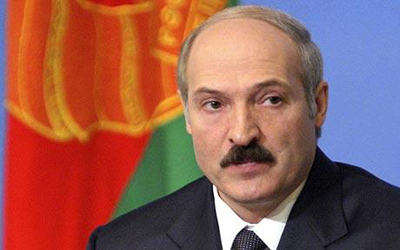
 MINSK/KIEV: Even harder times seem to lie ahead for Belarus's weak and fragmented political opposition after the country's hardline leader, President Alexander Lukashenko, linked it to this week's deadly metro bombing.
The April 11 bomb blast in the capital Minsk, which killed 12 people, wounded about 150 others and stunned the ex-Soviet republic of 10 million, left Lukashenko looking weakened.
Coming on top of Belarus's severe financial woes and a drain on dollar reserves and sanctions by the West because of his treatment of political opponents, the bomb blast made Lukashenko look oddly vulnerable.
When he toured the bomb-wrecked metro station close to his presidential offices on Monday evening shortly after the blast, hand-in-hand with his small son, he was ashen-faced and grave.
But the leader in power since 1994 bounced back on Wednesday, announcing that security services had responded to his call to hunt down the guilty quickly and had netted the culprits.
Not only had the suspects admitted to Monday's metro attack, he said, but they had also owned up to being behind two previous unsolved cases an explosion at a rock concert in 2008 and another at a cafe in Vitebsk in 2005.
But what sent shivers down the spine of his opponents was his instruction to security forces to study the "statements of political actors" an oblique reference that the 56-year-old often uses to describe the political opposition.
Clearly hinting that a link could be established between the suspects under arrest and members of the opposition, he said:
"We are looking for accomplices and those who ordered (the bombing). Maybe these actors from the 'fifth column' will show their cards and point to the one who ordered (the attack)."
His words appeared to herald a fresh drive by Belarus's state security service which has kept the old Soviet acronym of KGB against opposition activists and dissenters.
"All the signs are there that the authorities will use the blast to tighten the screws," Alexander Milinkevich, an opposition leader who ran for president against Lukashenko in 2006, told Reuters in Minsk.
Suggesting that Lukashenko was seeking to divert attention from mounting problems at home, Milinkevich said: "One of the reasons (for blaming the opposition) is economic problems. Another reason is obviously growing discontent."
HARASSED OPPOSITION
The ranks of the opposition in what the Bush administration once described as "the last remaining dictatorship in Europe" have already been decimated by arrest and harassment.
When more than 15,000 people rallied in central Minsk last December against Lukashenko's re-election for a fourth term in power, riot police waded in and initially detained seven of the nine presidential candidates who ran against him.
Hundreds of demonstrators and dissident activists were detained on the night and in a later KGB sweep.
At least four presidential candidates are still awaiting trial on charges linked to the Dec. 19 disorder which, in theory, could earn some of them up to 15 years in jail.
Another former presidential candidate has fled abroad after alleging KGB torture. Several well-known dissidents have also left the country.
"We should expect a few 'show trials'.
I don't know who will be the Joan of Arc (but) we must be ready,"Anatoly Lebedko, leader of opposition United Civic Party, told Reuters in Minsk.
Lukashenko badly needed to announce a quick breakthrough in the bombing investigation, most analysts agree.
A huge drain on currency reserves caused by pre-election spending has depleted the national bank's coffers and endangered Lukashenko's election promises to raise the average wage and living standards.
DOLLARS DRY UP
As the dollars have dried up and fears of devaluation persist, panic buying of consumer goods has begun to take hold among the population.
The Dec. 19 police crackdown triggered renewed sanctions against Lukashenko by the European Union and the United States in the shape of a travel ban on him and associates.
While he has in the past laughed such sanctions off, the new mood makes it difficult for Belarus to turn to the International Monetary Fund for financial help at a crucial period.
Isolation also increases uncomfortably for him his dependence on big neighbour Russia, Belarus's main provider of gas and oil.
Some analysts looked askance at Lukashenko's announcement that a "brilliant" police operation had speedily solved the Minsk metro bombing.
"Investigations into terrorist attacks are generally time-intensive and protracted as fragmentary evidence is pieced together," the London-based Exclusive Analysis think-tank wrote.
"The claim that the perpetrators of the attack have already been arrested, and have confessed to the attack and two previous ones, is likely to be more indicative of the highly politicised nature of the incident rather than the efficiency of the Belarusian security establishment," it said.
"Whoever was actually responsible for the attack, the types of highly politicised statements that have been issued today indicate that the incident will be used instrumentally to further political objectives "Executive Analysis wrote.
In a country that has little history of political violence, some analysts also say that Lukashenko risks losing some credibility by alleging a link between the bombing and his political opponents.



















Comments
Comments are closed for this article.