


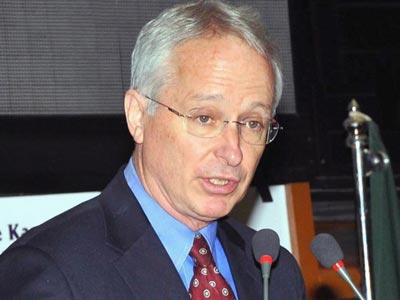
 ISLAMABAD: The US ambassador to Pakistan on Monday called for a renewal of ties in a bid to overcome a series of damaging rows that have hampered efforts to cooperate in the war on Al-Qaeda and the Taliban.
The January killings of two men by a CIA contractor exposed a growing rift between the countries' spy agencies over intelligence sharing and exacerbated tensions over America's controversial drone war targeting militants.
Cameron Munter acknowledged there had been difficulties, but stopped short of saying exactly how the United States could reset relations with Pakistan after months of strain.
"We have had some difficult days in the recent past," Munter told Islamabad's Institute of Strategic Studies think tank in a public address.
"We want to see renewal of the possibility and the hopes that we worked on for all these many years."
Last week, a White House report criticised the Pakistan's efforts to defeat the Taliban on the Afghan border. Islamabad rejected the findings and said it would not be held accountable for US-led failures in Afghanistan.
President Asif Ali Zardari then told the Guardian newspaper that the war in Afghanistan is destabilising Pakistan.
"We can't afford to cut and run," Munter said, seeking to address fears that the United States will abandon the region when it pulls out combat troops from Afghanistan, currently scheduled for 2014.
Instead, the United States would seek to "change the nature of our help".
"We want it to be training, we want it to be business," he said.
"But we won't leave, we don't want to leave... we must be wise enough to build the relationship outside of the military relationship."
Facing accusations that the CIA has worked without the permission of Pakistan's Inter-Services Intelligence agency, Munter acknowledged some errors and said the United States sought greater dialogue in the future.
"What we have to do is to accept that we have habits and we have tendencies that don't work for us that tend to get in the way.
"This is precisely why we are always uncomfortable... when we don't have the kind of contact that we need," he said.
"If we agree... that there is a terrorist threat to the mainstream life in this country, we need to talk more openly and more freely about the ways in which we can cooperate together to address that threat," he said.




















Comments
Comments are closed for this article.