

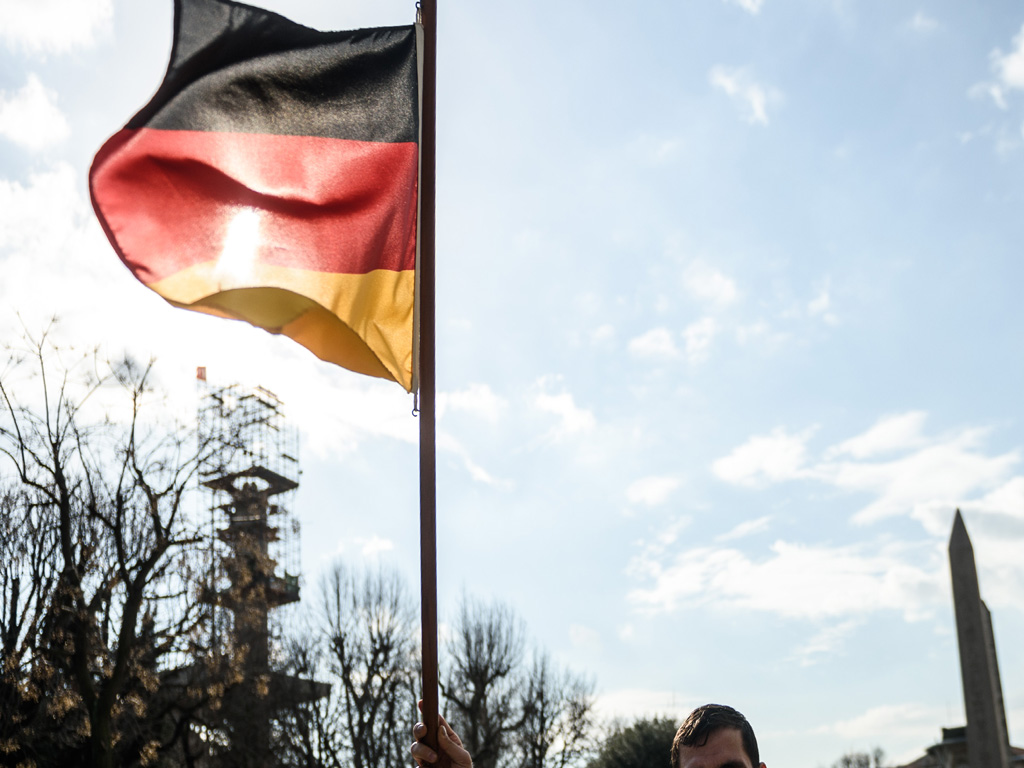
 BERLIN: Confidence among Germany's business leaders rose in March for the first time after six months of decline, according to the Ifo barometer released Monday.
The Munich-based Ifo institute's business confidence index was up 0.9 points this month, standing at 99.6, compared to 98.7 in February, which was its lowest level in four years.
"This is the first increase after six consecutive (months) of decline," Ifo president Clemens Fuest said in a statement.
"The companies are a little happier with their current business situation.
"They are also noticeably more optimistic about the coming six months."
Indeed, a sub-index measuring companies' view of the present business situation, one of the components of the Ifo barometer, increased to 103.8 points, compared to 103.6 points in February.
This statistic, based on a survey of around 9,000 companies, comes as Germany has seen a mixed set of indicators in recent months, linked to a mix of temporary factors and more lasting fears.
External risks like Brexit, stuttering Chinese growth and US-led trade tensions have in recent months been weighing on the minds of company bosses in Europe's export powerhouse.
Germany narrowly escaped recession by stagnating (0.0 percent GDP growth) from October to December last year, after a decline of -0.2 percent in the previous quarter.
"The Ifo index just sent a tentative signal of relief for the German economy," said ING Germany's chief economist Carsten Brzeski.
The new data "ends a period of pessimism and suggests that not all is bad in the German economy," he said.
After a new-look Germany football team beat the Netherlands 3-2 on Sunday in Amsterdam in their opening Euro 2020 qualifier, Brzeski could not resist pointing out: "If only an overhaul of the economy was as easy as changes in the line-up of the national soccer team".
However, there were warnings against over-optimism among leading economists, with the German government and several international institutions having lowered their growth forecasts for 2019.
"The climate brightening is a sign of hope but not more," said Joerg Zeuner, an economist at KfW Bank. "The economic train is still in the slow lane -- and the biggest obstacle is manufacturing.
"It is not only the slower pace of the global economy and global trade that is particularly noticeable here.
"At the same time, Brexit is approaching its dramatic climax and threatens to hit the export-strong industrial sectors in Germany particularly hard in the event of Britain's unregulated withdrawal."





















Comments
Comments are closed for this article.