

Saudi Arabia hopes Opec and its allies will be able to relax production curbs next year and create a permanent framework to stabilise oil markets after the current supply cut deal ends this year, its oil minister said on Saturday. The Organization of the Petroleum Exporting Countries is reducing output by about 1.2 million barrels per day (bpd) as part of a deal with Russia and other non-Opec producers.
The pact, aimed at propping oil prices, began in January 2017 and will run until the end of 2018. Saudi Arabian oil minister Khalid al-Falih said Opec and its allies were committed to bringing balance and stability to the market and that he hoped it would be possible to ease output curbs next year.
"A study is taking place and once we know exactly what balancing the market will entail we will announce what is the next step. The next step may be easing of the production constraints," he told reporters in New Delhi. "My estimation is that it will happen sometime in 2019. But we don't know when and we don't know how". Falih said Opec was determined to translate the success of the deal to curb supply into a permanent framework with other major producers.
"What we want is an evergreen framework that brings producers from Opec and non-Opec (countries) together in a market monitoring fashion that allows us to take quick decisions," he said. "I think everybody has learnt, producers as well as consumers, that a market without a steering wheel is very destructive, very damaging to the interests of all," he said. Falih said compliance with the output cuts in January was "exceptional."
Oil prices have doubled from their lows in 2015-2016 after the cuts. Falih said the market had absorbed rising US shale oil production, as output from countries such as Venezuela and Mexico had declined. US oil inventories fell last week. Saudi Arabia, the world's biggest oil exporter, in March cut production and exported less than 7 million bpd due to seasonally soft demand. Falih said that in January-March, Saudi Arabia's oil production was well below the production cap, with exports averaging below 7 million bpd.
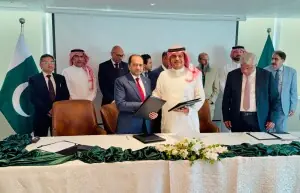
State oil company Saudi Aramco has signed a preliminary deal to invest in India's planned 1.2 million bpd West Coast refinery. Falih said Aramco was also looking at buying stakes in existing major refiners and expansion projects in India. He did not specify the size of stake Aramco will take in the west coast refinery, but added "the more the better." India aims to expand its refining capacity by 77 percent to about 8.8 million bpd by 2030.
Falih said Saudi Arabia would also sign oil supply deals as part of the agreement to buy stakes in Indian refineries, a strategy the kingdom has adopted to expand its market share in Asia and fend off rivals. Last year, Saudi Arabia pledged billions of dollars of investments in projects in Indonesia and Malaysia to secure long-term oil supply deals.



















Comments
Comments are closed for this article.