

Rampant load shedding of electricity has caused mass protests across Faisalabad Division, which was not only breaking the back of already crippled business activities, but also created severe problems for the citizens who are facing unscheduled electricity load shedding of 20 hours round the clock.
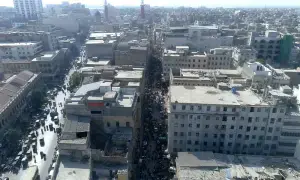
Trade organisations have announced that they would observe complete strike on Monday, while thousands of workers of power loom industry, Lakkar Mandi, fruit and vegetable market and other citizen took out a big procession on Jhang Road and blocked the traffic for six hours.
After remaining out of powers at all hours, people went berserk to stage mass protests crying anti-government slogans, burning tyres, blocking roads, sitting in, and whatnot.
"Life has become hell," a protestor and demonstrator said. Powerless sufferers over there gave their ire a vent by burning tyres on Jhang Road.
Gulberg, Jinnah Colony areas of Faisalabad had been boiling with same sentiments. The whole industrial city is a victim of 18-20 hours load shedding and as a result its once fabled textile industry has become a vegetable deep in the rot.
Angry people besieged a Fesco office, but to no avail, as it did not give them what they were protesting to have. Load shedding of electricity continued in all major and small cities of Faisalabad.
The power outages have created water shortage in several areas.
Several areas of Faisalabad city were without power for entire night, causing frustrated residents to protest on Sunday. Business activities have been severely affected around clock tower where urban areas are facing 20-hour load shedding while rural areas are facing 22 hours load shedding. The situation is similar in Toba Tek Singh, Jhang, Chiniot, Gojra, Khurrianwala industrial estate, Small Industrial Estate, whereas in Jaranwala up to 20 hours loadshedding is being experienced.
Qamar Aftab, Vice Chairman of Pakistan Hosiery Manufacturers and Exporters Association was critical about intensity of load shedding of electricity, which has practically crippled the value-added knitwear garment sector in particular. "What to talk of expansion of units or further industrialisation and investment in the country whereas the existing factories have remained unable to utilise their capacity," he questioned the government high-ups. He declared that the industry can meet the foreign exchange requirements of country "if we are enabled to work day and night".













Comments
Comments are closed for this article.