

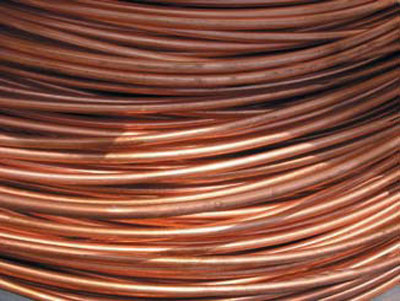
 MELBOURNE: London copper drifted on Tuesday as the dollar held strong after recent solid economic reports, although optimism that U.S. presidential candidate Hilary Clinton was pulling ahead in the polls fed appetite for risk, limiting losses.
A stronger dollar makes commodities, priced in the U.S. currency, more expensive for buyers paying with other currencies. But as China's economic activity ramps up after a week of holidays, demand is expected to strengthen into year end.
"We have shifted from copper bears to modest bulls on better signs of real demand in China and a looming slowdown in supply growth," said UBS in a report.
Three-month copper on the London Metal Exchange edged down 0.2 percent to $4,838 a tonne by 0323 GMT, slipping away from Monday's $4,860-top - its highest since Oct. 3.
In a bid to combat rising property prices, a number of Chinese cities including Beijing, Guangzhou, Shenzhen, Suzhou, Chengdu and Wuhan, announced new restrictions on purchases and mortgage down payments early this month.
However, negative sentiment was soothed by signs of a mending economy and hopes that efforts to curb property purchases may only have limited impact on overall steel demand.
China's economy showed positive changes in the third quarter and the country's debt risks are under control, Premier Li Keqiang also said in a speech in Macau on Tuesday.
Other LME metals, nickel, tin and lead retraced around half a percent following gains of between 0.5 to 3 percent on Monday when China's markets resumed following its golden week holiday.
"The fundamental outlook for aluminum appears to be incrementally loosening as we head towards 4Q16 as Chinese aluminum demand... enters a seasonally slower period," JP Morgan said in a note.
"Chinese smelter production looks primed to surge 11 percent year on year in 4Q 16 as restarts continue to trickle back and new capacity ramps up."
China is the world's biggest user of aluminium, accounting for around 45 percent of demand. Local aluminium prices hit the highest since May 2015 this week after capacity cuts earlier this year, and as more producers make liquid aluminium, which is tightening supply of metal.
Morgan Stanley pointed to upside risk for zinc prices, given a backdrop of tight supply and as China's galvanisers typically restock ahead of Q1, when global steel production rates seasonally rise.
LME zinc prices had slipped by 0.8 percent on Tuesday to $2,310 a tonne and were down by 2.8 percent so far in October, trimming the year's gains to 44 percent.






















Comments
Comments are closed for this article.