

Policy for vulnerable flood victims: NDMA

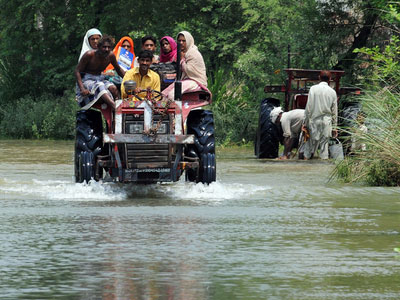
ISLAMABAD: National Disaster Management Authority (NDMA) would launch a policy for supporting women and children affected by floods on October 7.
Chairman NDMA Dr. Zafar Qadir while addressing a donor's meeting held for the humanitarian response at NDMA said, the Authority has established a separate cell for dealing with the issues of women and children during disasters as they are most vulnerable due to socio-cultural barriers and physical weakness.
The meeting was informed that almost 8.7 million populations, including 2.8 million women and children, have been affected by the destruction resulting into loss of life and assets and more importantly the livelihoods due to floods.
He said the government has incorporated the Gender-Child Cell as a permanent body of the Authority due to its special focus on women and children issues.
Nighat Siddiqui, an official of Gender-Child Cell, said a course of action focusing on Gender Equality and Protection Concerns would be included in all the processes of disaster management.
She added that the Cell is also working on the Referral mechanism which would identify, help, trace, cater for interim care, and arrange family reunification for the missing, unaccompanied and separated children in collaboration with line international organizations Save the Children and United Nations Children Fund (UNICEF).
Sharing his remarks, Mengesha Kebede, a United Nations High Commissioner for Refugees (UNHCR) representative in Pakistan said `registration is the protection'.
He said until the complete details of the affected people are available it is difficult to pinpoint their needs, adding that the provision of relief should be related to their needs.
Giving a detail presentation on the findings of UNHCR, Maya Ameratunga, and Deputy Representative of the Commission said access to assistance for vulnerable groups should be focused for formulating a strategy for the flood victims.
She said difficulties faced by persons with disabilities, loss of documents, persons separated from their families and missing persons' problems should be considered while drawing a concrete frame work.
Child protection Specialist from United Nations Children Fund (UNICEF), Elizabeth Cossor in her presentation informed meeting members that UNICEF has established a child protection working group to protect children from violence, exploitation and neglect.
She suggested that 600 child friendly places should be established ensuring education and health besides gender base violence sub-cluster to facilitate 300,000 children affected by recent floods.
A representative of United Nations Family Planning Associations (UNFPA), Sujata Tuladhan, apprised the meeting that 28 percent of flood victims are women and among them 1.8 percent are in reproductive age.
She asked for ensuring provision of hygiene kits to these women to avoid any major health risk.
Copyright APP (Associated Press of Pakistan), 2011













Comments
Comments are closed for this article.