

Asia on maritime crash course: Think-tank

 SYDNEY: Nationalism and hunger for resources are stoking maritime disputes in Indo-Pacific Asia, with China showing "troubling signs of assertiveness at sea", an Australian think-tank warned Tuesday.
The Lowy Institute foreign policy group said there had been an "upsurge in confrontation at sea in Asia in recent years", with clashes increasing in both frequency and intensity and the stakes "certainly" getting higher.
"Nationalism and resource needs, meanwhile, are reinforcing the value of territorial claims in the East and South China seas, making maritime sovereignty disputes harder to manage," the paper said.
"Chinese forces continue to show troubling signs of assertiveness at sea, though there is debate about the origins or extent of such moves."
Expanding naval and air power meant Asia was becoming a "danger zone" for close-range encounters between competing powers, "typically in sensitive or contested" areas, Lowy warned in a new strategic study.
"While the chance that such incidents will lead to major military clashes should not be overstated, the drivers -- in particular China's frictions with the United States, Japan and India -- are likely to persist and intensify."
The study, "Major Powers and Maritime Security in Indo-Pacific Asia" was prepared from wide ranging interviews with security workers and experts in China, Japan and the United States.
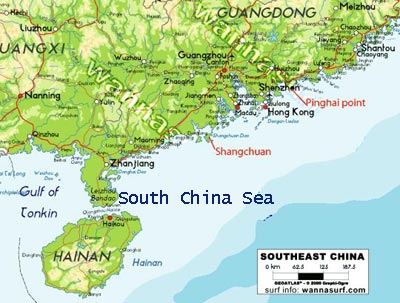
It cited a March 2009 confrontation between Chinese ships and the USNS Impeccable in the South China Sea off Hainan island as typical of East Asia's modern maritime security environment.
Suspecting the Impeccable of gathering intelligence on Chinese submarines, Lowy said the US ship was "shadowed and harassed" until it fled the area. Beijing has denied harassing the vessel.
The incident damaged the US-China relationship and shook Asian maritime stability more generally, presaging North Korea's sinking of the South Korean warship Cheonan last March and shelling of Yeonpyeong island, Lowy said.
"Beijing's mishandling of these issues -- its refusal to blame North Korea -- has damaged relations with South Korea," the think-tank said.
China's relations with Washington were further damaged by Beijing designating its territorial claims in the South China Sea a "core" defence interest which could require the use of force, the study found.
Beijing had "encountered direct maritime mistrust with a range of other nations, notably India and some Southeast Asian neighbours" due to territorial disputes, it added.
"The South China Sea is now looked upon as another strategic flashpoint in East Asia," Lowy said.
The study found Asia was ill-prepared for maritime conflict, with low levels of trust between nations and formal rules and communication channels "flimsy and little-used".
China would only agree to confidence-building exercises when it had established trust with the other nation, while western powers including Washington saw them as necessary "precisely when trust is absent", Lowy said.
An escalation in the number and tempo of confrontations would increase the chances of an armed stand-off, diplomatic crisis or even conflict, playing into a "wider deterioration of security relations among major powers," it said.
Though currently concentrated in East Asia, Lowy said the risk of major-power conflict could spread across the entire Indo-Pacific, with "competition between China and India at sea only a matter of time".
Copyright AFP (Agence France-Presse), 2011














Comments
Comments are closed for this article.