

Volcano ash woes worsen in Australia, ease in Argentina

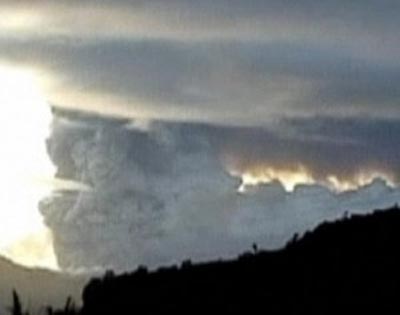 BUENOS AIRES: Airborne ash from a Chilean volcano dissipated enough Wednesday for flights to resume in Argentina's capital, but it spread farther across the globe worsening travel chaos in Australia.
Planes were taking off and landing in Buenos Aires's two airports thanks to rain that took some of the engine-choking ash and glass particles out of the air. Services have been only intermittent over the past 10 days.
"Flights started to slowly resume since Tuesday night, with three international flights departing," one Buenos Aires airport official told AFP.
"Rain in the past few hours has dissipated the ash cloud and provided an opening for the airlines."
Aerolineas Argentinas, the national flag carrier, dispatched a special flight to Miami Wednesday to pick up around 1,000 Argentines who had been stranded.
Neighboring Uruguay was also operating flights across its small territory, clearing a backlog that had stacked up over the past few days.
Australia, though, was not so lucky.
The ash cloud from the erupting volcano in Chile spread to western Australia on Wednesday, hitting airlines flying into and out of Perth.
Though the situation lifted enough in southern Australia for domestic carriers to restart services for the city of Adelaide, routes between Australia and New Zealand were again canceled after being briefly reopened.
The widespread air travel havoc followed the June 4 eruption of the Puyehue volcano, high in Chile's Andes, which had lain dormant for half a century.
Thick ash has been billowing out of the volcano and traveling across the southern hemisphere, posing a danger to aircraft and recalling the widespread chaos caused in 2010 when an Icelandic volcano's eruption paralyzed air traffic over Europe.
Chilean experts said Puyehue's "plume" had almost made a complete circuit of Earth, with the circumference of the planet being some 24,900 miles (40,000 kilometers).
The ash cloud belching out over the past 12 days, and carried eastward by winds of up to 100 kilometers (60 miles) per hour was expected to reach Chile again by the end of this week.
"The plume is already at (Easter Island's capital) Rapa Nui and should be tapping us on the back on Saturday," said Pablo Ortega, the secretary general of Chile's civil aviation agency.
Easter Island is in the Pacific Ocean, 3,500 kilometers from the coast of mainland Chile.
Chila's National Geology and Mining Service said the volcano was showing "instability" as measured by seismic readings and the height of the ash cloud, which initially reached nine kilometers into the troposphere but now floated at seven kilometers.
That meant "it is possible there will be a return to increased eruptive activity," it said in its last bulletin.
Sally Cutter, from Australia's Volcanic Ash Advisory Centre, said the lower level of the ash near Perth did pose a risk.
"Volcanic ash makes it dangerous to fly, particularly for jet engines, due to the fact it can cause the engines to stop, so it's really up to each individual airlines to assess the risk they're prepared to take," she told reporters.
Copyright AFP (Agence France-Presse), 2011

















Comments
Comments are closed for this article.