


 TRIPOLI: Libyan central bank may finalise Islamic finance regulations by March, in what would be the first major step towards introducing sharia-compliant banking in the country.
The bank's deputy governor, Ali Mohammed Salem, also told Reuters in an interview on Tuesday the exchange rate of the Libyan dinar would be fixed for up to three years, pegged to the IMF's special drawing right currency basket.
The government was expected to run a budget deficit in 2012, which will be financed domestically, he said.
"The banking law of 2005 will be changed by adding a new chapter regulating Islamic banking and once the law is approved, Islamic banks will be given licences," Salem said. "It is possible that it will be ready by the end of March."
Mustafa Abdul Jalil, chairman of the National Transitional Council, said in October Libya's new rulers were working on an Islamic banking system.
While that announcement raised speculation the entire banking system in Libya might be converted into an Islamic one, Salem said: "Islamic banks will compete with conventional banks. They can offer their services to customers who will decide for themselves".
Salem said licenses would be granted to both commercial and government-owned banks, adding policy on whether to grant foreign banks access to the Libyan market was yet to be formulated. "That depends on economic planning by the cabinet to build the national economy."
"The exchange rate will be fixed for one to three years to prevent it from shocks resulting from the current crisis in Libya," he said. "After three years, if the current interest rate is the best option it will be kept."
Libya's large cash reserves kept the dinar largely stable during the civil war that ended Gaddafi's 42-year rule, he said.
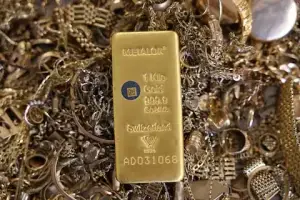
Salem said the central bank's major concern was to restore liquidity in the Libyan banking system, which was depleted of its dinar reserves when Gaddafi's entourage seized 3-4 billion dinars ($2.4-$3.2 billion) from the central bank. They also seized 2.3 billion dinars worth of gold, he said.
The problem was made worse when people rushed to the banks during the war, withdrawing 7 billion dinars, Salem said.
He said the central bank was working on injecting cash into local banks by printing 6 billion dinars, adding the first batch of 300 million dinars was delivered on Dec. 24.
"We will have nearly 3 billion dinars by March and that is enough to absorb the liquidity problems," he said.
On the unfreezing of Libyan foreign assets by the UN Security Council, Salem said the decision meant the central bank had immediate access to between $6-$7 billion cash. An estimated $150 billion had been frozen by the UN resolution.
Turning to how a 2012 government deficit might be financed, Salem said: "The current system is to issue bonds in the local market. It is not international borrowing. We have enough reserves, there is no need at the moment to go to the international market."














Comments
Comments are closed for this article.