

Muslim community undergoes shared suffering after enduring pain of others: Research
- Researchers call this phenomenon ‘vicarious trauma’ a condition to experience pain that other people have faced.
- Walter says Muslim communities share a strong moral bond based on shared cultural and religious belief system.
- Hate crimes can have significant impacts on the emotions and behaviours of entire communities of people, says Mark Walters.
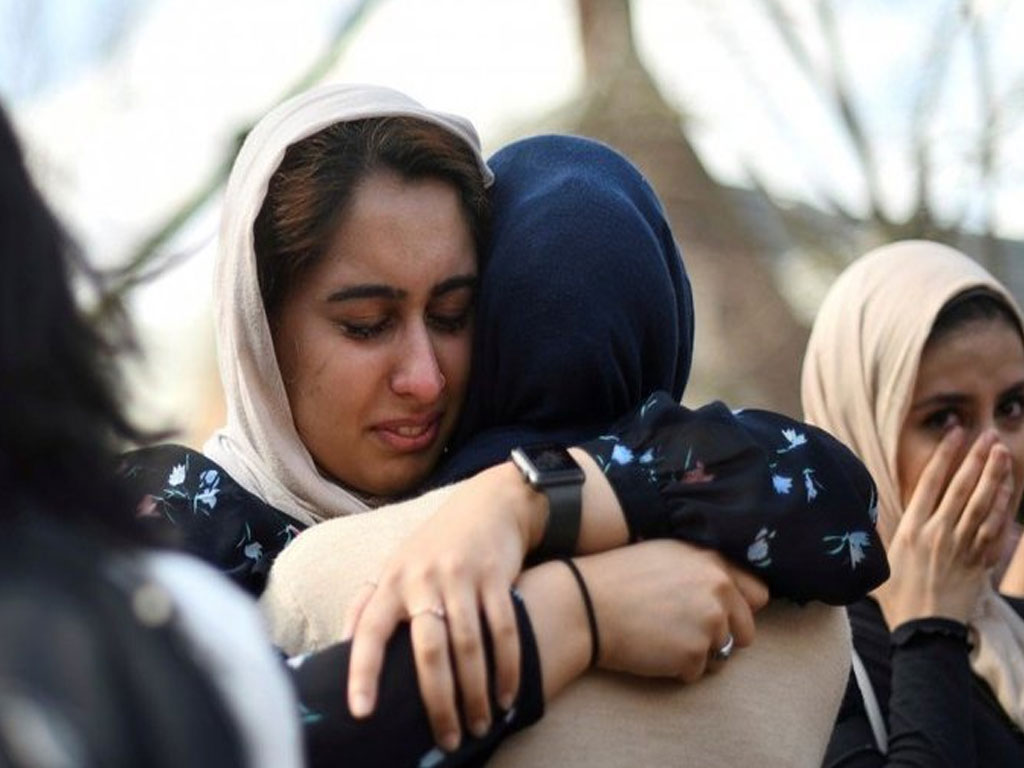 (Karachi) A recent research at Sussex University has revealed that Muslims as a shared community are more prone to becoming witnesses to the pain and fear that is endured by the survivors.
According to an article published in Metro-co.uk, researchers call this phenomenon ‘vicarious trauma’ a condition to experience pain that other people have faced.
Commenting on the theory, Lead Author of Sussex University Study Professor Mark Walter said the research studied the impact of Islamaphobic hate crimes against British Muslims.
He transpired that Muslim communities share a strong moral bond based on shared cultural and religious belief system. He said Muslims share a concept of brotherhood and “Ummah” which means “community of believers”.
Walter maintained that a Muslim person is likely to experience “vicarious trauma” after hearing or reading about the victimization of another Muslim, both at local and international level.
He said the research paper also outlines the effects of indirect hate crimes on behavior and emotions of the Muslim community.
Professor Walters pointed out, “Hate crimes are “message crimes” aimed at terrorising entire groups of people.” He added, “It often results in entire communities of people feeling vulnerable to targeted victimisation and this can result in individuals changing the way they behave, including where they are prepared to go in their neighbourhoods and who they feel safe socialising with.”
The research suggests that hate crimes can have significant impacts on the emotions and behaviours of entire communities of people. These impacts extend beyond local communities to effect Individuals nationally and even globally.
The article also refers to an incident of the Christchurch attack in New Zealand in which 51 Muslims died while worshipping when a gunman opened indiscriminate fire on them. It tells about the pain and terror that not only the families of the victims passed through but the entire Muslim community.
The tragic incident left the Muslims around the globe grieving and upset. The research highlighted the need to take measures to deal with the trauma.
On such platform, The Amaliah, dedicated to amplifying voices of Muslims, dealth with the “vicarious trauma” by conducting soul sessions after the incident. However, the findings state that there is lack of adequate services and spaces to address such issues.
The researchers studied 18 people belonging to Muslim community, who hailed from different countries including Bangladesh, Pakistan, India and Afghanistan.
The interviewees were recruited through Sussex University in partnership with Muslim organizations. The age of the participants ranged from 18 to 59 years that included 12 males and six females.


















Comments
Comments are closed for this article.