

US Senate votes to restrain Trump on Iran
- Eight senators of Trump's Republican Party, which enjoys a majority, bucked their leadership to join Democrats, following a classified Iran session by the Trump administration that one Republican called the worst briefing he had ever witnessed.
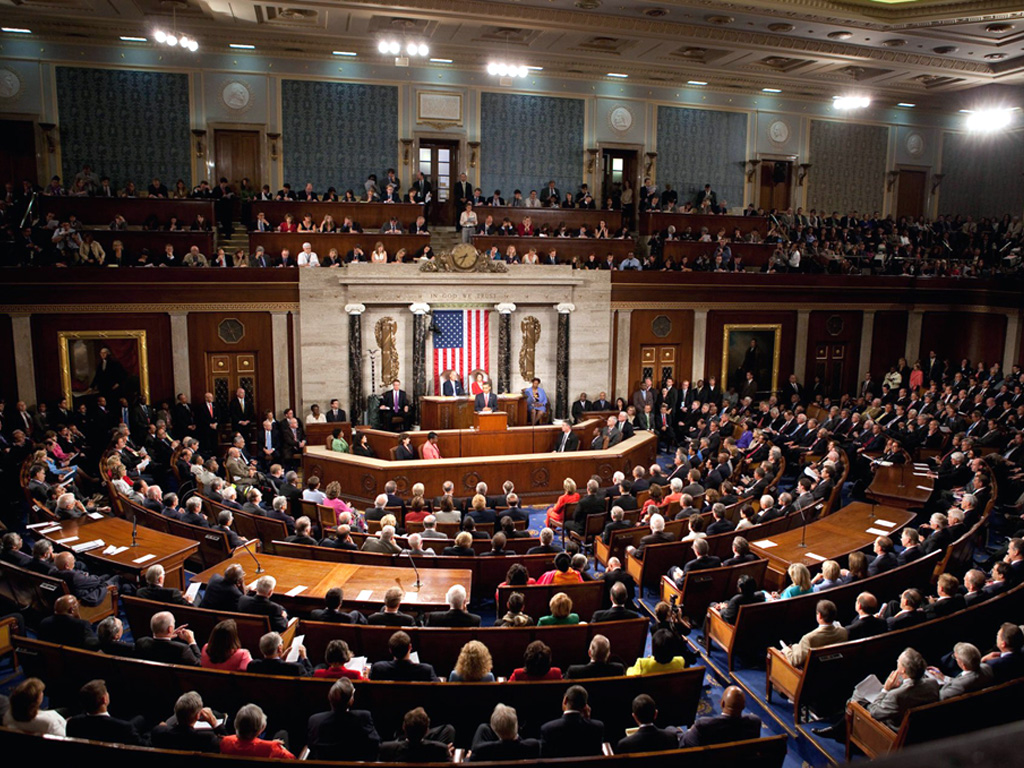
WASHINGTON: The US Senate voted Thursday to rein in President Donald Trump from attacking Iran, sharply rebuking his foreign policy despite a week earlier acquitting him in his impeachment trial.
Eight senators of Trump's Republican Party, which enjoys a majority, bucked their leadership to join Democrats, following a classified Iran session by the Trump administration that one Republican called the worst briefing he had ever witnessed.
The resolution, which bars the United States from any military action against Iran without explicit approval by Congress, will head to the Democratic-led House of Representatives, which passed a text in similar form last month.
But much like an earlier attempt by Congress to end US support for Saudi Arabia's devastating offensive in Yemen, Trump is nearly certain to issue a veto, with lawmakers lacking the two-thirds majority to overturn it.
Moments before the vote, a rocket slammed into an Iraqi base housing US troops in the first attack on the site since a December 27 incident killed a US contractor, according to Iraqi and US security sources. There were no immediate reports of casualties.
The contractor's death set off an escalating crisis in which Trump ordered a drone strike at the Baghdad airport that killed Qassem Soleimani, Iran's most powerful general.
Democratic Senator Tim Kaine introduced the resolution after Soleimani's death.
While warning of dire consequences of an escalating conflict with Iran, Kaine said his main point was to restore the authority of Congress to declare war, as spelled out in the US Constitution.
"An offensive war requires a congressional debate and vote. This should not be a controversial proposition," Kaine said in a speech on the Senate floor.
The resolution makes an exception if the United States is "defending itself from an imminent act."
Senator Chuck Schumer, the Democratic leader, said that Trump had escalated tensions by killing Soleimani.
"Let me be clear -- nobody in this chamber will shed a tear over the death of Iranian General Soleimani," he said.
"But that doesn't mean that we disregard the potential consequences of the strike or any comparable action."
- Move to target Guards defeated -
Tensions have soared between the United States and Iran since 2018 when Trump withdrew from a denuclearization accord negotiated by his predecessor Barack Obama and imposed sweeping sanctions aimed at reducing Tehran's regional role.
Soleimani, the head of the elite Revolutionary Guards' overseas Qods force, enjoyed vast influence within the clerical regime and was seen by the United States as orchestrating rocket attacks on bases in Iraq that house US troops.
The Senate defeated a motion by Senator Tom Cotton, a vociferous opponent of Iran, to exempt any military action directed at "designated terrorist organizations."
The Trump administration last year designated the Islamic Revolutionary Guards Corps as a terrorist organization, the first time the United States has done so to a government body.
Senator Marco Rubio, a close ally of Trump, said that Kaine's resolution would increase the risks of war.
"Iran will think they can kill Americans without strong retaliation because they will mistakenly believe (Trump) faces bipartisan restraints on retaliatory options," Rubio wrote on Twitter.
But a number of Republicans disagreed, arguing that Congress should have the power to determine conflict.
Senator Susan Collins, a closely watched moderate Republican who voted to acquit Trump in his impeachment trial, said she wanted to assert the power of Congress.
She said the resolution did not cease ongoing activities such as US Navy patrols around the Strait of Hormuz, a crucial chokepoint for oil shipments.
The Iranian regime should not "interpret these votes as a lack of resolve against its aggression and malign activities in the region," she told reporters.
But the resolution, she said, will show that "no president has the authority to commit our military to a sustained conflict."



















Comments
Comments are closed for this article.