

More evictions feared in India as citizenship law is enforced
- Police and municipal officials say the homes were built illegally on state land, and that residents were undocumented migrants from Bangladesh.
- The residents said they were migrants from other Indian states, and that they were evicted without any notice.
- The Karnataka state high court has prohibited further evictions, and asked the municipal corporation to respond to its queries on the eviction by Jan. 29.
(MUMBAI) Days after nearly 200 homes were demolished in an informal settlement in the southern Indian city of Bengaluru, human rights groups and slum dwellers said they expected more such evictions as a new citizenship law is enforced in the country.
Police and municipal officials said the homes were built illegally on state land, and that residents were undocumented migrants from Bangladesh.
The residents said they were migrants from other Indian states, and that they were evicted without any notice.
The Karnataka state high court has prohibited further evictions, and asked the municipal corporation and the police to respond to its queries on the eviction by Jan. 29.
Human rights groups said it was an outcome of tensions around India's new citizenship law, which came into effect on Jan. 10 and lays out a path for citizenship for six religious minorities in neighbouring mostly-Muslim countries - Pakistan, Afghanistan and Bangladesh.
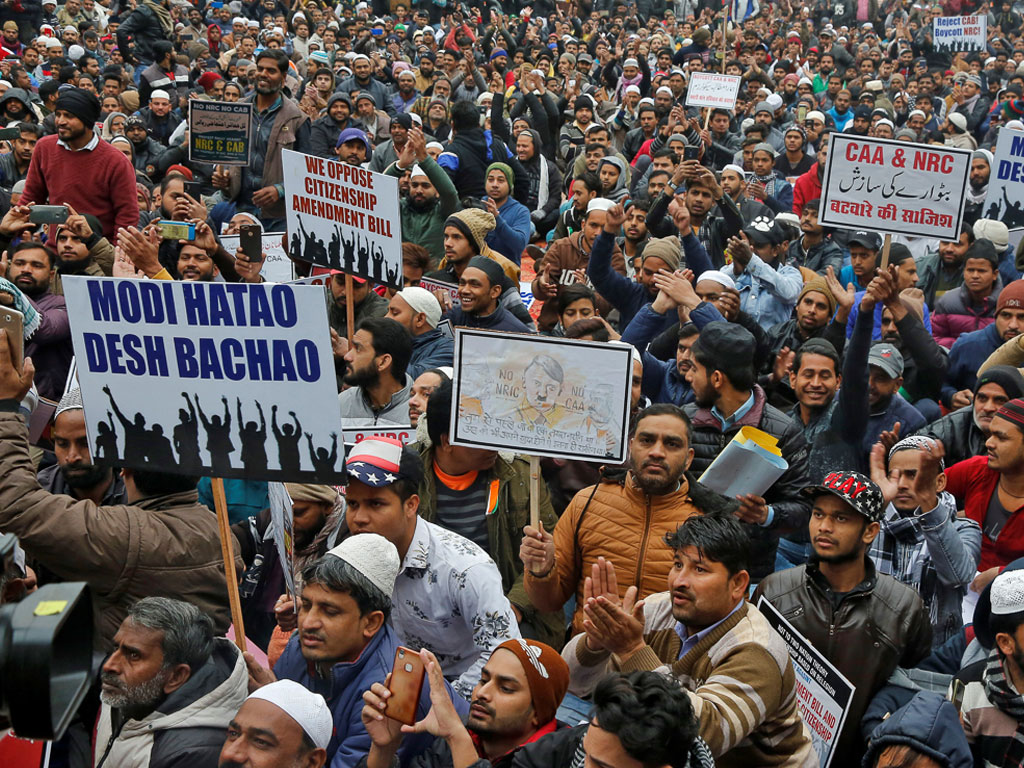
Critics say that the omission of Muslims is discriminatory, and that the Citizenship Amendment Act (CAA), as well as a planned National Register of Citizens (NRC), target poor Muslims and others who do not have sufficient documentation.
Migrant workers are particularly vulnerable, as they often live in informal settlements, said Isaac Selva, founder of Slum Jagatthu, a non-profit magazine on slum dwellers in Bangalore.
"Bangalore is full of migrant workers, and a large number of daily wage workers tend to live in slums. Not everyone has ID papers," he told the Thomson Reuters Foundation.
"We think more such evictions will take place because of the CAA and NRC, because authorities are being told these people do not have a right to be here."
Nearly 2 million people - including Hindus - were left off a list of citizens released in Assam last year for failing to have adequate documentation, after a years-long exercise to check illegal immigration from Bangladesh.
On Wednesday, India's top court gave Prime Minister Narendra Modi's government four weeks to respond to 144 petitions challenging the constitutional validity of the Citizenship Amendment Act, which has ignited protests across the country.
"A large majority of people living homeless and in informal settlements do not have government-issued documents," said Shivani Chaudhry, executive director of non-profit Housing and Land Rights Network in Delhi.
"The current climate in the country has fuelled fears that the lack of adequate documents among large sections of India's urban and rural poor could lead to evictions and destruction of their homes and property," she said.
The rapid growth of Indian cities, combined with unclear land ownership, has triggered the forced eviction of poorer communities over the last two decades, human rights groups say.
At least 11 million people in India risk being uprooted from their homes and land as authorities build highways and airports and upgrade cities, according to HLRN, which said more than 200,000 people were forcefully evicted in 2018.
There are no official figures on evictions.


















Comments
Comments are closed for this article.