

Scientific Breakthrough: Pollution-free hydrogen to the rescue


Scientists have developed a pollution-free method for extracting hydrogen from oil, without releasing climate-affecting pollutants like carbon dioxide and methane.
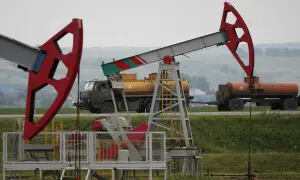
A group of Canadian scientists earlier today announced the discovery of a way to produce hydrogen without the emission of harmful greenhouse gases. This hydrogen is obtained directly from oil sands and oil fields, leaving the carbon dioxide and methane in the ground.
This technology was developed by Ian Gates and Jacky Wang as the result of an agreement between the University of Calgary and Proton Technologies Inc., which now holds the patent.
The team unveiled their findings at the ongoing Goldschmidt Geochemistry Conference in Barcelona which finishes on August 23. They further revealed that this clean method of energy production could fulfil Canada’s entire electricity requirement for the next 330 years, according to Silicon Republic.
Earlier in 2003, the MIT Technology Review argued that hydrogen fuel cells in cars could not be a reality because there was no clean and inexpensive way to extract hydrogen. However, these scientists have proved them wrong with their latest discovery.
Unlike petrol and diesel which emit harmful gases when burnt, hydrogen does not, thus making it an efficient fuel for car engines. Currently, limited hydrogen-powered vehicles are available including the ‘Toyota Mirai’, ‘Hyundai Nexo’ and the ‘Honda Clarity’.
These cars use hydrogen fuel cells to generate electricity to power the engine, eliminating toxic emissions. Hydrogen for these vehicles is mainly produced from natural gas, which releases methane, contributing to global warming.
Although this groundbreaking production method is not entirely new, it prevents carbon dioxide from escaping into the air, which had not been achieved before. Secondly, it is economical. Grant Stem, CEO of Proton Technologies says, “When working at production level, we anticipate we will be able to use the existing infrastructure and distribution chains to produce H2 for between 10 and 50 cents per kilo. This means it potentially costs a fraction of gasoline for equivalent output," reports PhysOrg.
While this method has the potential to utilize existing oilfield infrastructures that are not working at full capacity, it is yet to be tested on an industrial scale to determine its practicality.



















Comments
Comments are closed for this article.