


Venezuela opposition out in the cold as Maduro eyes second term

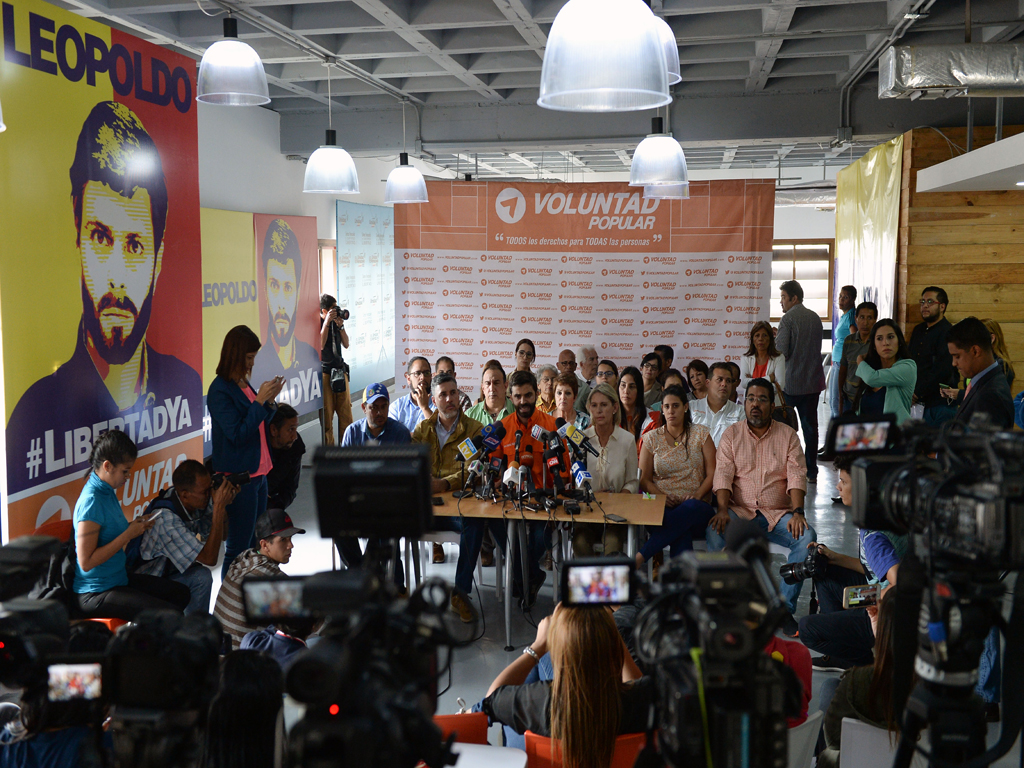
CARACAS: Venezuela's opposition scrambled to reset itself Friday after a top court barred it from contesting the upcoming presidential election, paving the way for a second term for unpopular President Nicolas Maduro.
The Supreme Court, in a shock ruling Thursday, effectively ordered the national election council to exclude the main opposition parties.
The opposition had already been thrown into disarray by the government's decision to hold snap elections months ahead of schedule.
France said Friday the court move "undermined the fairness of these elections, after having changed the electoral calendar" without consulting the opposition.
The Maduro-dominated Constituent Assembly decided earlier in the week that elections must be held by the end of April, leaving a raft of opposition parties scrambling to begin the process of finding a candidate to unify its vote.
But now the opposition -- the Democratic Union Roundtable, or MUD -- has been left in the cold by the ruling of the court, which did not state the grounds for its order.
Opposition parties were expected to respond to their latest setback in a press conference later Friday.
- 'Risk of violence' -
===============
Analysts said the double blow to Maduro's opponents left limited options for the opposition and increased the risk of a return to violence.
"Maduro's institutional control, and the ability to shape the outcome of the election, leaves social upheaval as the main catalyst for any eventual regime change," said Risa Grais-Targow, Latin America director for market analysts Eurasia.
"The latter remains a viable possibility, given the fact that the economic crisis is careening to new extremes on multiple fronts."
Venezuela, hard hit by sharply lower oil prices on the global market, is enduring one of the worst crises in its history. Inflation for this year is forecast to hit 13,000 percent.
From April to July last year, angry Venezuelans took to the streets in protest, with 125 people killed as the demonstrations degenerated into clashes with security forces.
"Since the holidays, low-grade spontaneous unrest has been occurring across the country in response to the government's inability to provide basic goods," said Grais-Targow.
"The unrest remains uncoordinated and the security apparatus has so far been willing to repress it. But that could very well start to change if it explodes into a more acute social crisis that sees millions of people taking to the streets over a sustained amount of time."
Maduro -- the handpicked successor of late socialist icon Hugo Chavez -- has long drawn criticism at home and abroad, accused of running a leftist dictatorial regime in this oil-rich and once prosperous country now facing economic ruin with acute shortages of food and medicines.
- Barred from running-
=================
Many of the opposition's leaders were already barred from running, and the parties were desperately trying to find a candidate to unify their forces.
There are clear divisions in the ranks between those who reject Maduro and those who see compromise as the only way forward out of the simmering crisis.
The parties that make up the coalition had been told they must re-register with electoral authorities after boycotting local and regional polls last year, claiming government fraud.
But Thursday's decision by the Supreme Court instructed the electoral authorities to delay the registration for six months, making participation in the presidential election impossible.
Earlier on Thursday, Dominican President Danilo Medina, who has been overseeing talks between Maduro's government and the opposition, had insisted that both sides would return to the negotiating table in Santo Domingo on January 28 and 29.
But the opposition has not confirmed its attendance.





















Comments
Comments are closed for this article.