



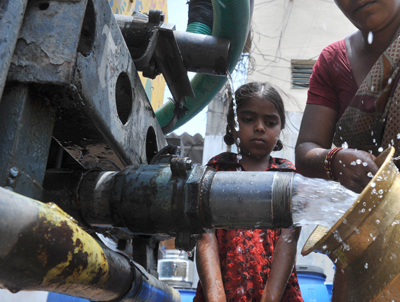
 ISLAMABAD: About 80 percent of illnesses in developing countries are due to unsafe water, resulting in an estimated 2.5 billion illnesses and 5 million deaths each year.
According to World Health Organization, "at any given time, one-half of all people in the developing world are suffering from one, or more of the six main diseases (diarrhea, ascaris, dracunculiasis, hookworm, chistosomiasis, trachoma)".
Approximately 884 million people in the world do not have access to an adequate source of drinking water and two-thirds of the world's population could be living in water-stressed countries by 2025 if current consumption patterns continue.
Talking to APP, Spokesperson PCRWR Lubna Naheed said inadequate quantity and quality of potable water and poor sanitation facilities are associated with a host of illnesses and a large number of child deaths occur each year in the country due to water-borne diseases.
Unsafe drinking water is a source of many diseases, including diarrhoea, typhoid, intestinal worms and hepatitis, she said.
It has been reported that an estimated 62 percent of Pakistan urban and 84 percent of rural population do not treat their water and resultantly 100 million cases of diarrhoeal diseases are registered in hospitals and 40 percent deaths are caused by polluted water.
A study conducted by UNICEF found that 20-40 percent of the hospital beds in Pakistan are occupied by patients suffering from water- related diseases.
Lubna Naheed said the water quality monitoring conducted in rural and urban areas of the country revealed that the access to safe drinking water is only 15 percent in urban and 18 percent in rural areas.
The findings of the survey identified four major water quality tribulations: bacteriological contamination (68 percent); arsenic (24 percent); nitrate (13 percent) and fluoride (5 percent).
Presently, only 8 percent of urban sewerage water and 1 percent of industrial waste water is treated before disposal.





















Comments
Comments are closed for this article.