



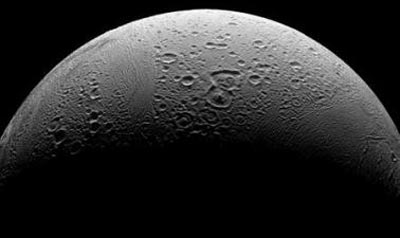
 SYDNEY: Australian scientists on Tuesday said they had identified a possible 280 additional craters on the Moon, a finding they said could shed light on the history of the Earth's natural satellite.
By combining gravity and topography data collected by satellites, the scientists from Curtin University in Western Australia were able to use computer modelling to at first identify two basins on the far side of the Moon.
They later developed a high-resolution image to find a total of 280 "candidate basins" which they suspect are craters.
"There are many more (craters) that have been mapped from optical observations or from just the shape of the topography," researcher Will Featherstone told AFP.
"So there's many, many craters that were already known, we've just been able to apply this technique to enhance the ones that aren't so easy to see.
"What we have been able to use is the topography and the gravity together to get a stronger indication that there is something there that needs further investigation."
Featherstone said the researchers looked at the lunar surface on both the near and far sides of the Moon, the dark side being more challenging because satellites cannot be tracked from Earth when they are on that side.
To get around this, the researchers used data gathered from a mission which used multiple satellites which were tracking each other as they circled the Moon.
"So when the satellite orbiting the Moon went behind the far side and they couldn't be seen from Earth, they could be seen by other satellites," he said.
Featherstone said of the 280 possible craters, the researchers had classified 66 of them as distinctly visible according to both gravity and topography.
"Scientists can, instead of looking at every square inch of the Moon looking for basins, they can target these areas," he said.
"It just helps investigations of the Moon and the history of the Moon and the solar system," he added.
The team has also done some work on the gravity of Mars and Featherstone said other data sets were also available for Venus and other planets.
He said scientists were optimistic about further discoveries from applying their techniques to new gravity data from NASA's GRAIL mission, which ended in late 2012 when the two satellites - named Ebb and Flow - were deliberately crashed on the Moon.























Comments
Comments are closed for this article.