



 SYDNEY: Most fossil fuels must remain in the ground because burning them will unleash changes that will "challenge the existence of our society", a new Australian government agency report warned on Monday.
The Climate Commission study found that the burning of fossil fuels such as coal, a key Australian export, represented the most significant contributor to climate change.
"Burning all fossil fuel reserves would lead to unprecedented changes in climate so severe that they will challenge the existence of our society as we know it today," said the report, The Critical Decade.
"It is clear that most fossil fuels must be left in the ground and cannot be burned."
Most nations, including Australia, have agreed that the risks of the climate changing beyond two degrees Celsius are unacceptably high.
But to ensure the climate is stabilised, the world must "virtually decarbonise", the report said.
"In order to achieve that goal of stabilising the climate at two degrees or less, we simply have to leave about 80 percent of the world's fossil fuel reserves in the ground," report co-author Lesley Hughes told state broadcaster ABC.
"We cannot afford to burn them and still have a stable and safe climate." The report noted a recent resurgence in the discovery and exploitation of new reserves of fossil fuels in Australia and elsewhere, including new coal fields as well as coal-seam gas and shale oil.
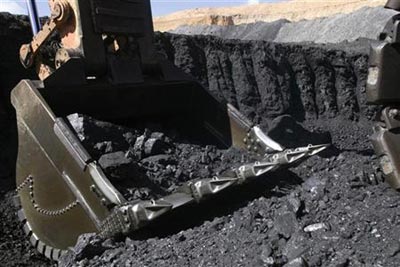
Australia's coal reserves alone represent about 51 billion tonnes of potential carbon dioxide emissions, or around one-twelfth of the 600 billion tonnes which, if emitted, are thought would push temperatures above the two degrees Celsius threshold, it said.
The independent Climate Commission, established by the government in 2011 to provide authoritative information on climate change, called for an immediate slowdown in carbon emissions.
"Growth in the use of coal will need to be turned around, so that it makes up a much smaller proportion of the global energy mix and eventually not used at all," it said.
But Australia's Resources Minister Gary Gray said while it was important to invest in clean energy technologies, coal was vital to the economy.
"There is no solution to global baseload energy generation that does not figure a big contribution by coal," he told the ABC.
The minister said developing countries such as India and China were reliant on Australian coal for energy.
"We do have to accept that in a growing region there are still countries that need these resources in order to draw hundreds of millions of people out of poverty," he said.
Coal is Australia's largest energy export earner, with a value of around Aus$48 billion (US$46 billion) in the 2011-12 fiscal year, followed by crude oil and liquefied natural gas.
Energy exports accounted for 34 percent of the value of Australia's total commodity exports in the same year.
Will Steffen, a fellow co-author of the report said action was needed immediately because many of the climate change risks scientists had warned of for years were now happening.
"The duration and frequency of extreme hot days has increased across Australia and bushfire weather has increased in the populous southeast," he said.
"Rainfall patterns have shifted, with food-growing regions in the southwest and southeast becoming drier."























Comments
Comments are closed for this article.