


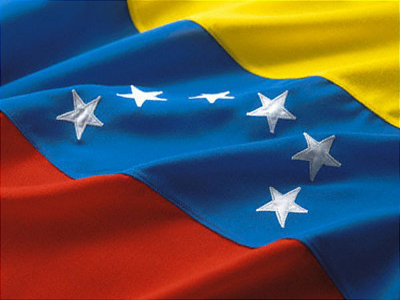
 CARACAS: Venezuela's united opposition holds a first-ever presidential primary Sunday to pick its standard bearer to take on incumbent President Hugo Chavez in the October ballot.
The open primary, the first of its kind in the country, will gauge the momentum of support for the opposition Democratic Unity coalition (MUD) eight months before a showdown with Chavez, the firebrand left-wing leader in power since 1999.
Capriles, a 39-year-old moderate state governor from the center-left Primero Justicia (Justice First) party, currently leads in the polls.
Single and with movie star looks, he governs Miranda state, which includes parts of the Caracas metropolitan area. Capriles's chances were boosted last month when Leopoldo Lopez, a popular former mayor, dropped out of the race and endorsed him.
Capriles's main rival is Pablo Perez, 42, of the Un Nuevo Tiempo (A New Era) party. Perez is governor of Zulia, Venezuela's most populous and wealthiest state.
Both Perez and Capriles say they want to end the country's deep political polarization and have pledged to fight poverty. Both have campaigned with a conciliatory message and have avoided directly criticizing Chavez.
They also propose continuing and improving the popular social programs adopted by the Chavez government since 2003, notably in the areas of health and housing.
The other candidates in the race are independent legislator Maria Corina Machado, labor leader Pablo Medina, and former ambassador Diego Arria. Unlike the governors, this trio has chosen to aggressively challenge Chavez.
In January the opposition parties unveiled a unity platform focusing on free-market economics and emphasizing public safety.
Their plank include an end to price controls, in place since 2003; adopting a competitive currency exchange rate; reassessing Chavez' creation of a socialist state; and returning autonomy to the Central Bank.
The historically divided opposition formed the coalition to compete with Chavez’s United Socialist Party of Venezuela (PSUV) in the 2010 legislative elections. The opposition won more than 50 percent of the popular vote.
The 57-year-old Chavez, who last year underwent cancer chemotherapy in Caracas and Havana and now claims to be cured, is seeking a third six-year term in the October 7 vote.
A staunch critic of the United States, Chavez is the main political and economic ally of Cuba, the only one-party communist regime in the Americas.
He also has also offered support for other left-wing governments across Latin America.
Capriles claims that his presidency would inaugurate a "cycle of progress" in Venezuela by using the same model that led to Brazil's economic boom.
He also promises to address Venezuela's biggest problems, including a dearth of housing, soaring crime and a 28 percent inflation rate, the highest in Latin America.
Like Capriles, Perez said he does not plan to roll back all of Chavez policies.
"We don't intend to come to power and say: We are ending everything and bringing something else," he said. "What we view as good, we'll keep, what needs to be improved we will improve and with what we disagree, we will see."
Capriles and Perez have emerged in recent months "as favorites precisely because they sought to depolarize the country and refrained from confronting Chavez," said historian Margarita Lopez Maya.
"It's apparently an electoral strategy that works," she said.
The US-backed coalition has called on Venezuelans to head to 7,600 polling stations set up around the country to cast ballots, and have vouched for the confidentiality of their votes.
A key issue will be the voter turnout.
"It is risky to venture a figure because this (primary) is a new thing in Venezuela, Beatriz Fernandez, head of the firm Datastrategia, told AFP.
But she said between 10 and 15 percent of the country's 18 million voters may vote.
In the ballot, Venezuelans will also chose opposition candidates for gubernatorial elections in December and mayoral races in April 2013.
The US-based pro-democracy Carter Center, founded by former US president Jimmy Carter, said it was sending "a small study group" to Venezuela for the primary.
The group's goals include learning "the perspectives of key political actors" and civil society members on Venezuela's national elections.
"The Carter Center's study mission will not constitute an electoral observation delegation," the statement emphasized.






















Comments
Comments are closed for this article.