

The World Economic Forum's Annual Meeting in the third week of January every year in Davos, Switzerland, is a major creative force for engaging top leaders from across the world to undertake joint action relating to events for shaping the global, regional and industry agendas. Six to eight regional meetings in different locations, such as Latin America and East Asia, are on the annual calendar, with two more annual meetings in China and the United Arab Emirates. The WEF's reputation for great integrity is derived from its commitment of being totally impartial. Not tied to any political, partisan or national interests and "committed to improving the state of the world", the WEF works under the supervision of the seven-member Swiss Federal Council, which constitutes the federal government, serving as the collective executive head of government and the state of Switzerland.
The theme of the WEF's 47th Annual Meeting from January 17 to 20 is 'responsive leadership'. More than 2,500 leaders from across the world consisting of leaders from business, government, academia, international organisations, civil society, the media and arts will gather to discuss some of the most critical issues confronting the world. Global leaders are called on "to renew the systems that have supported international co-operation in the past by adapting them for today's complex multi-polar world in ways that foster genuinely inclusive growth." According to WEF founder and Executive Chairman Klaus Schwab, "Responsive Leadership means recognising the increasing frustration and discontent among those not experiencing economic development and social progress. Their situation will only become more uncertain with the onset of the Fourth Industrial Revolution and its impact on future employment".
The programme will focus on five 'gravity centres', each designed to help leaders address distinct challenges in 2017, such as: (1) strengthening systems for global collaboration, (2) addressing identity through positive narratives, (3) revitalising the global economy, (4) reforming capitalism and (5) preparing for the fourth Industrial revolution. The WEF's Forum of Young Global Leaders comprises 800 creative men and women under 40 from all walks of life, from every region of the world, and from every stakeholder group in society irrespective of caste or colour. After five years of participation they are considered alumni.
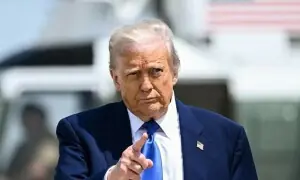
Top global leaders expected to be the prime attraction include British Prime Minister Theresa May and Chinese President Xi Jinping, European leaders include Mark Rutte of the Netherlands and Enda Kenny of Ireland. The Brexit vote in Britain and the election of Trump as US president were attributed to rising public anger with the political establishment and globalisation. Certain leaders might not want to attend a conference that has become synonymous with the global elite.
Geopolitical shifts have created new challenges affecting global dynamics. Today, non-state actors have reshaped their agendas, adjusted their capabilities and are able to challenge and disrupt not only national systems but also global ones. The turmoil in the Middle East is symbolised by the carnage in Syria and Iraq, with Yemen and Libya suffering terribly. The war in Afghanistan goes on and on. Focus will fall on the rising public anger against global inequality and globalisation. Klaus Schwab believes, "to withstand this threat, countries cannot simply close themselves off. The only way forward is to make sure that globalization is benefiting everyone". Nations must cooperate and interact on shared interests. The US will be a focus of special interest because of the election upset that saw Donald Trump emerge victorious. The meeting's final day, January 20, coincides with the inauguration of the president-elect. Debate will focus on how Trump will govern after assuming office. His hard-right appointments, particularly in posts in the White House, will trigger serious political polarisation.
The face of warfare is changing with attacks now becoming cheaper than defence, as is true in the cyber world. One way of restoring some stability could be to organise defence at the lowest possible level. Jean-Marie Guehenno president and CEO of the International Crisis Group writes: "By empowering individuals to protect themselves against cyber-attacks through point-to-point encryption, and empowering cities to strengthen local connections among its citizens. This will make it a bit more difficult to launch attacks from the outside". The devolution of power and responsibility to the lowest levels of government and to individuals will have a positive effect, in that it will deprive terrorists and others of targets.
The influx of migrants created immense difficulties. Fearing for their lives, huge numbers of people fled Africa and the Middle East because of civil war and terror, risking their lives along the way in the hope of finding a better future and safety for their loved ones. In 2015 alone, more than a million migrants and refugees crossed into Europe, and UNHCR figures show that the number reaching European shores in 2016 passed the 300,000 mark at the end of September. This shows no signs of abating with the conflicts in Syria, Iraq, Afghanistan and Nigeria continuing while poverty in Kosovo and abuses in Eritrea driving out thousands to look for new lives elsewhere. According to the UN a record number of 3,800 migrants perished in the Mediterranean during the first ten months of 2016. High on the WEF's agenda in its last Annual Meeting, the migration crisis was described as 'the biggest threat to the planet ahead of major natural catastrophes or even weapons of mass destruction".
Last year Prime Minister Mian Nawaz Sharif's solo networking in Davos was mostly bilateral meetings. While this does benefit Pakistan, our negative image can only be developed by casting a longer shadow over the Davos world stage. Two federal cabinet members, both female, are on various panels, more power to them! One major development is the WEF invitation at short notice for former COAS General Raheel Sharif to take part in high-profile security-related panels, as well as confidential discussions on key matters with heads of government and state. A unique honour for Raheel Sharif himself and for the Pakistani Army is that he commanded in exemplary fashion until retirement. His presence is a strong signal of Pakistan's image changing to positive because of its Army's successful counter-insurgency and counter-terrorism campaigns.
A handful of Pakistani businessmen at Davos are unable to shoulder the burden of projecting Pakistan. In sharp contrast 125 Indian businessmen come as WEF members and use this forum to great benefit. Davos is a unique opportunity to showcase Pakistan. Our major business leaders must use the Davos platform to be counted as the outstanding entrepreneurs they are.
(The writer is a defence and security analyst)






















Comments
Comments are closed for this article.